In a nutshell
- 🔋 Eco mode trims energy by targeting the real guzzler—the heating element—delivering typical savings of 20–40% per load on washing machines and dishwashers.
- ⏱️ Longer, cooler cycles win: you pay for degrees, not minutes; reducing water temperature cuts kWh even when runtimes increase, with meaningful annual savings for busy households.
- 🧪 Maximise results with enzyme detergents, sensible loading, regular maintenance (descale, clean filters), off-peak scheduling, and by avoiding “quick wash” for dirty loads to prevent hidden energy costs.
- ⚠️ Skip Eco for heavily soiled items, hygiene-critical loads, or when someone is immunocompromised—use 60°C+ or intensive cycles; remember that speed and urgency cost extra watts.
- 🌍 Make Eco your default to lower UK bills and carbon while keeping performance high; track per-load kWh to refine pretreatment and cycle choices for your home.
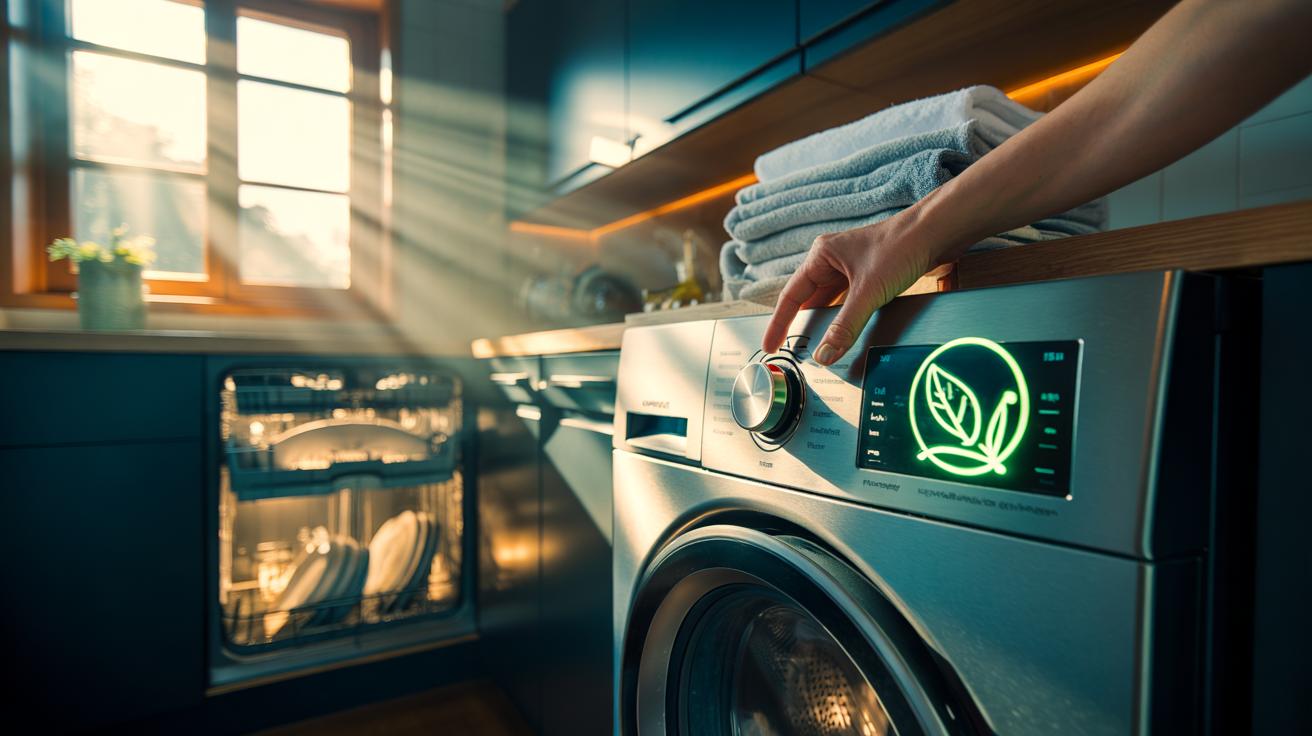
Every month, readers ask how to cut electricity without living by candlelight. Energy gurus keep pointing to a quiet hero most people ignore: the Eco mode tucked into modern washing machines and dishwashers. It looks timid. It isn’t. This setting changes how your appliance uses power, prioritising lower temperatures and smarter water management. The result? Smaller bills, less carbon, clean kit. The trick is simple: heat less, for longer, and let chemistry do the heavy lifting. With unit rates biting across the UK, the numbers add up quickly. Here’s why this overlooked button earns its place on your shortlist for household savings.
What Eco Mode Actually Does Inside Your Machine
Pressing Eco mode doesn’t merely slow things down. It rewrites the energy profile of the cycle. The biggest guzzler in both appliances is the heating element. Raising water to 60°C or higher demands lots of kWh. Eco reduces target temperatures, extending soak and agitation so enzymes in modern detergents can work properly. Your motor sips watts; your heater drains them. Cut heater time and you cut the bill.
Dishwashers in Eco often use heat-exchangers and better spray patterns to reuse warmth. Many machines measure cloudiness (turbidity) and adjust mid-cycle. Less rinsing. Fewer reheats. In practice, Eco can trim electricity use by 20–40% per load without compromising outcomes on everyday soils. Yes, cycles can look long. That’s by design. The trade-off is kilowatt-hours, not cleanliness. Longer does not mean wasteful; it means the heater rests while time and chemistry do the work. For households running multiple loads a week, those quiet savings compound into meaningful, year-round reductions.
Why Lower Heat Means Lower Bills
The physics is blunt. Heating water costs. Energy required scales with volume and temperature rise: mass × specific heat × ΔT. Warm 40 litres by 30°C and you’re near 1.4 kWh; 50 litres pushes to about 1.7 kWh. Motors and pumps? Tens of watts. Heaters? Thousands. That’s why a cooler but longer Eco cycle typically wins. The heater cycles less, or to a lower setpoint, and the rest is low-power circulation. Lower temperature equals fewer kilowatt-hours, even if the clock runs longer.
At current UK unit rates, trimming 0.3–0.6 kWh per run quickly adds up. Families running five to ten cycles weekly see annual savings in the tens of pounds, sometimes more with larger households. The table below offers ballpark figures for common machines. They’re indicative, as real use varies with soil, load size, and inlet temperature.
| Appliance | Typical Standard Cycle (kWh) | Eco Mode (kWh) | Saving | Notes |
|---|---|---|---|---|
| Washing machine (40–60°C) | 0.9–1.5 | 0.5–0.9 | 20–40% | Best with enzyme detergent at 30–40°C |
| Dishwasher (intensive) | 1.2–1.6 | 0.8–1.1 | 20–35% | Scrape plates; use rinse aid and salt |
You pay for degrees, not minutes. That’s the heart of Eco. It attacks the most expensive part of every cycle, the heat, without asking you to compromise on basics like hygiene for everyday loads.
Getting Real-World Savings Without Sacrificing Cleanliness
Success with Eco starts before you press start. Scrape, don’t pre-rinse; you’ll save hot water and keep soils realistic for detergents. Use a good enzyme-rich detergent designed to activate at lower temperatures. In washing machines, choose a 30–40°C Eco programme and let it run fully; stop-starting breaks the chemistry. Load sensibly. Not crammed, not half-empty. Balanced drums and baskets clean better and let Eco shine.
Maintenance matters. Descale in hard-water areas. Keep filters clear. For washing machines, do an occasional 60°C maintenance wash to prevent biofilm and odours; for dishwashers, run a hot cycle monthly with a cleaner if needed. If you’re on a time-of-use tariff, schedule Eco cycles for off-peak windows and stack savings. Shun “quick wash” for dirty loads; it tends to raise temperatures to compensate for time, costing more than you think. Finally, keep expectations sharp: tea tannins and baked-on grime may need pretreatment. Eco mode is not a miracle button; it’s a smarter default that wins most of the week, most of the year.
When You Should Skip Eco Mode
There are sensible exceptions. Heavily soiled sports kit, cloth nappies, chopping boards, or items requiring hygiene cycles may need 60°C+ to meet safety guidance or remove oils. If someone in the home is immunocompromised or has severe allergies, follow the higher-temperature instructions your clinician or manufacturer recommends. Winter can extend Eco times when incoming water is very cold; that’s still efficient, but if you’re in a hurry, you’ll pay for speed with heat. Eco’s economy thrives on time; urgency costs watts.
Dishwashers packed with crusted baking trays might be better served by an intensive cycle after a soak, or by scraping and using Eco with a high-quality tablet. For washing machines, choose stain removers engineered for low temperatures, or pre-treat, then keep Eco as your baseline. Remember to check manuals: some “Eco 40–60” programmes are tested for energy labels and are excellent all-rounders. In short, use Eco by default, escalate only when hygiene or heavy soil truly demands it. That way, you bank the savings on nine cycles out of ten.
Eco mode hides in plain sight, yet it lands real cuts on the one thing that fattens electricity bills: heat. Switch it on, pair it with the right detergent, keep your machine maintained, and let time and chemistry take over. Your laundry stays fresh, your plates sparkle, and your meter slows. The choice isn’t hair-shirt frugality. It’s simply using the clever engineering you’ve already paid for. If you’ve tried Eco for a month, how much did your kWh per load change, and what tweaks made the biggest difference in your home?
Did you like it?4.5/5 (26)