In a nutshell
- 🧻 The toilet paper roll sniff test uses empty loo-roll cores as scent sleeves to reveal which odours attract or repel your cat, helping stop peeing outside the litter tray quickly.
- 🧪 Set up 4–6 rolls with safe inserts—clean/used litter, pheromone spritz, catnip/silvervine, and a water control—then observe your cat’s reactions to build a reassuring scent corridor to the tray.
- 🧭 Turn observations into action: seed trays with a spoon of used litter, lightly spritz entry mats with pheromone, avoid perfumed liners and cleaner residues, and clean accidents with an enzymatic cleaner.
- 🛡️ Prioritise safety: avoid essential oils, bleach, ammonia, and strong fragrances; if you see straining, frequent visits, or vocalising—especially in males—seek a prompt vet check.
- ✅ Combine scent wins with litter basics: follow the “two trays for one cat” rule (and +1 for multi-cat homes), use large low-entry boxes for seniors, scoop twice daily, and change one variable at a time for fast, lasting results.
Cats live by their noses. When they start peeing outside the litter tray, the story is often written in scent, not spite. The “toilet paper roll sniff test” is a quick, cheap way to decode that story and nudge your pet back to ideal habits. It uses empty loo-roll cores as harmless scent sleeves, allowing you to map which odours comfort your cat and which repel them. Many owners report results within a day, because once you remove the olfactory trigger and add the right attractant, the bathroom behaviour changes fast. It’s simple, safe when done correctly, and designed for real homes—not laboratory conditions.
What Is the Toilet Paper Roll Sniff Test?
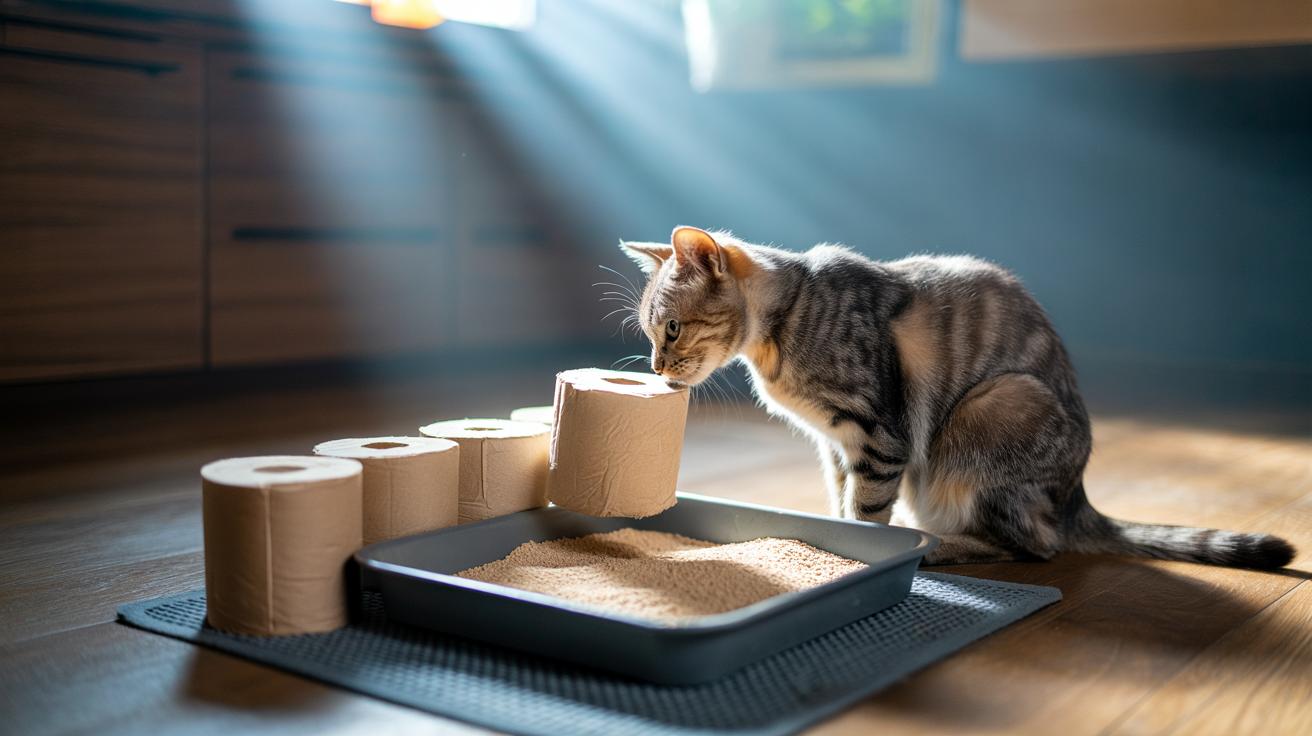
The toilet paper roll sniff test is a structured, home-friendly assessment that identifies the odour cues driving your cat’s toilet choices. Each empty roll acts as a neutral tunnel for a small scent source—think a pinch of clean litter, a dab of feline pheromone, or a sachet of catnip or silvervine—so you can present options without mess or risk. The goal is to discover what draws your cat towards the tray and what pushes them away. Cats evolved to read scent like headlines; they’ll investigate, approve, or avoid within seconds, telling you precisely where to intervene.
Unlike guesswork or blanket “one size fits all” fixes, this method separates helpful attractants from accidental deterrents such as harsh cleaners, perfumed liners, or a tray that smells too strongly of ammonia. It’s fast to set up and surprisingly revealing. You’ll learn whether your cat prefers unscented clay, fine sand-like litter, or the reassuring whiff of their own used granules. You’ll also see whether a synthetic feline facial pheromone calms them at the tray entrance. This is scent mapping, but with cardboard and curiosity.
Step-by-Step: Set Up and Run the Test
Gather 4–6 empty toilet paper rolls, cotton pads, reusable labels, and zip bags. Prepare safe inserts: a teaspoon of your cat’s usual litter (unused), a pinch of their recently used litter (dried), a spritzed cotton pad with a cat-safe pheromone, a small sachet of catnip or silvervine, and a plain water control. Avoid essential oils, menthol, eucalyptus, citrus, and strong disinfectants—these can be aversive or toxic to cats. Slip each insert into its roll, label discreetly, and store in bags for 10 minutes to stabilise the scent.
Place the rolls one at a time on the floor near, but not inside, the litter tray area. Let your cat approach on their terms. Observe quietly for 30–60 seconds per roll: sniffing, chin rubbing, head-bunting, relaxed tail, and stepping into the tray indicate attraction; flinching, lip curl, tail swish, or walking away suggest aversion. Note timing, intensity, and any return visits. Then test combinations: pheromone roll at the tray entrance plus a used-litter roll beside the tray can create a reassuring scent corridor. If your cat appears stressed, stops mid-urination, or vocalises, end the session and give space. Aim for two short sessions in a day rather than one long marathon.
Interpreting Reactions and Fixing the Litter Problem
The power of the sniff test lies in turning observations into action. Positive responses—rubbing, lingering, or stepping into the tray—tell you which scent cues to deploy as gentle attractants. Mild interest can be amplified by pairing the winner with a calmer environment: a covered corner, a non-slip mat, and a tray that’s 1.5 times your cat’s body length. Strong aversion points to a blocker, often a cleaning product residue or too much perfume on litter liners. When you remove the “nope” odour and boost the “yes” cue, accidents often stop almost immediately.
| Scent in Roll | Common Reaction | What It Suggests | Action to Take |
|---|---|---|---|
| Used litter (dried) | Rubbing, revisits, tray entry | Seeks familiar territory markers | Seed new tray with a spoon of used granules for 24 hours |
| Pheromone (F3-style) | Relaxed sniffing, head-bunting | Needs reassurance and safety cues | Lightly spritz entry mat; respray daily per product guidance |
| Catnip or silvervine | Playful roll, curiosity | Needs positive engagement near tray | Use sparingly beside, not inside, the tray to lure visits |
| Plain water (control) | Neutral or brief sniff | Scent novelty, not moisture, drives interest | Focus on preferred cues, not humidity |
| Household cleaner odour (distant sample; don’t present directly) | Avoidance, tail swish | Cleaner fragrance repels | Switch to an enzymatic cleaner; rinse thoroughly and air-dry |
Combine insights with fundamentals: two trays for one cat, plus one extra for multi-cat homes; wide, low-sided trays for seniors; scoop twice daily; weekly deep clean with unscented detergent followed by enzymatic treatment. If stress is a trigger—new baby, building noise, visiting pets—create escape routes, elevate resting spots, and feed near the tray area to build positive associations. Your cat isn’t naughty; they’re negotiating scents and safety.
Safety, Hygiene, and When to See the Vet
Safety first. The roll is harmless cardboard, but inserts matter. Stick to cat-safe pheromones, clean or used litter, and modest catnip or silvervine. Never use essential oils, bleach, ammonia, or strong fragrances as test scents. For cleaning accidents, start by blotting, then apply an enzymatic cleaner that breaks down uric acid crystals; standard detergents usually fail here, leaving a signature your cat can still read. Air-dry thoroughly before reintroducing the tray or attractant rolls.
Medical issues can mimic behaviour problems. If your cat strains, passes tiny drops, visits the tray frequently, or vocalises, call your vet the same day—especially males, where urinary blockage is an emergency. Older cats may avoid high-sided trays due to arthritis; swap in a low-entry box and softer, fine-grain litter. New kittens benefit from multiple mini-trays across rooms until habits solidify. Consistency is king: present the winning scent corridor for a week, then taper. If signs persist despite changes, schedule a veterinary check for UTI, cystitis, or pain. Behaviour follows health.
This humble cardboard experiment offers clarity where frustration usually rules. With a handful of loo-roll sniffers, you can identify attractive cues, eliminate stealthy repellents, and reset your cat’s bathroom map fast. Keep notes, tweak one variable at a time, and celebrate small wins—the first confident tray visit, the second day without a puddle, the week the house smells like nothing at all. Your home becomes calmer the moment your cat feels safe. Ready to try the test this weekend—and which scent do you think your cat would choose first?
Did you like it?4.7/5 (23)