In a nutshell
- 🧠 Colour-coding creates a visual hierarchy that cuts decision fatigue, helping your eyes find outfits faster and boosting calm from the moment you open the wardrobe.
- 🎨 Practical method: group by colour families, arrange light-to-dark, then by sleeve length or formality; file prints by their dominant base colour and use consistent hangers for instant readability.
- 🕒 Real payoff: save 5–10 minutes each morning, expose duplicates, improve cost per wear, speed up packing and laundry—your wardrobe becomes a quiet styling engine.
- 🧹 Keep it working: rehang laundry straight into the right block, do a two-minute evening reset, use one-in, one-out, rotate seasons—prioritising repeatability over perfection.
- 😊 Mood and performance: coherent colour blocks prime mood, and enclothed cognition supports confidence, making truly stress-free mornings feel routine.
Every morning starts with a choice, and too often it’s the wrong kind: rummaging in the half-light for a shirt that isn’t creased, or trousers that match. Professional home organisers swear by a deceptively simple fix: colour-coding your wardrobe. It’s not about being precious or faddish; it’s about freeing your brain from low-value decisions so you can get out the door feeling composed. When your clothes are arranged by hue, your eyes make decisions before your mind even tries. The result? Quicker picks, fewer clashes, and a subtle lift in mood that lingers beyond your commute. Here’s why the system works, and how to make it stick.
The Psychology of Colour: Why Your Brain Loves Order
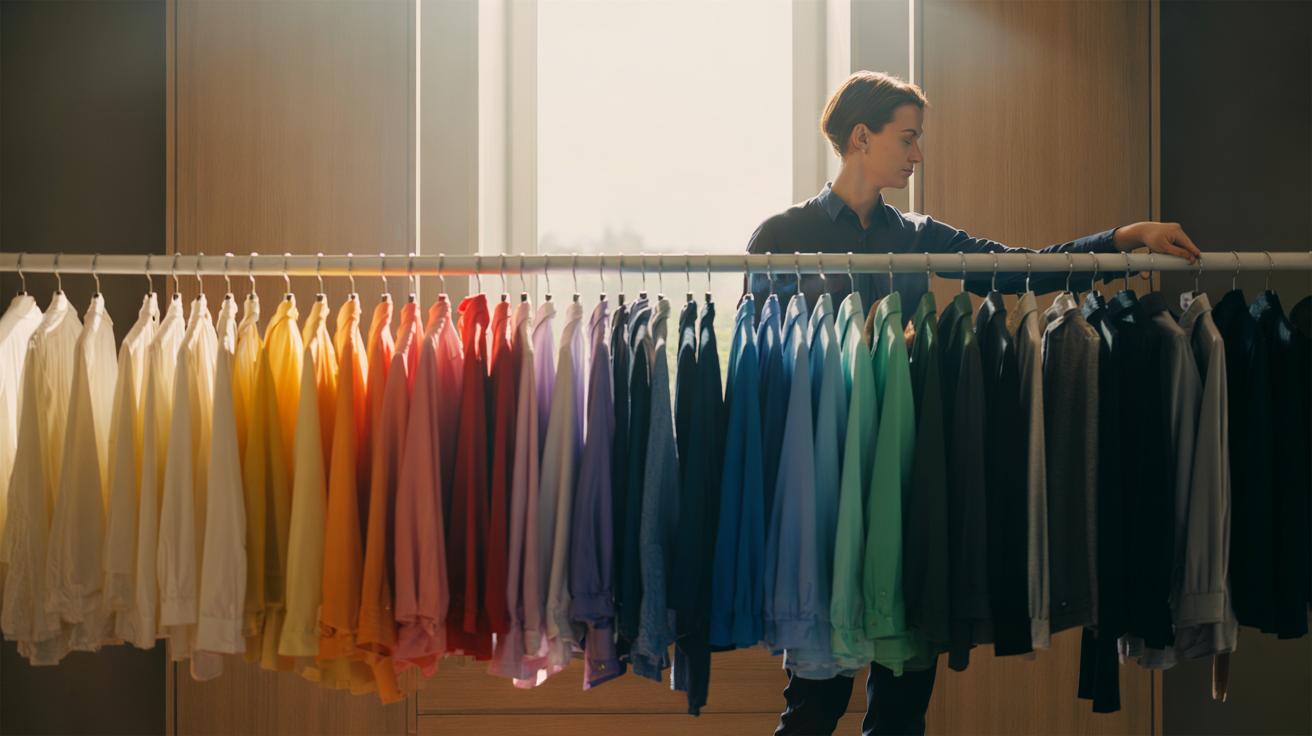
The secret isn’t aesthetic; it’s neurological. Your brain thrives on a visual hierarchy, scanning for patterns and edges before it processes details. A colour-graded rail creates an instant map, shrinking the search field and cutting decision fatigue. Think of it like a well-organised toolbar: you know where to look, so you act faster. By scripting the scene, you reduce cognitive load and reclaim precious morning minutes. That’s why organisers call colour-coding the “fastest tidy” – one change that quietly improves everything you do next.
There’s an emotional dividend, too. Blocks of blue, neutrals flowing into blush, a confident run of red – these cues prime mood. You’re nudged toward outfits that reflect intent: calm for a presentation, warmth for a coffee with a client, sharp contrast when you need momentum. Crucially, the system allows instant comparison. If you’ve three navy jumpers, you’ll see them side by side, revealing duplicates and gaps. Less dithering, more clarity. Order isn’t fussy; it’s functional.
And the science isn’t airy. Visual search studies show colour is one of the fastest attributes your brain filters. By grouping by hue first, then by sleeve length or formality, you align with how perception actually works. It’s organising with biology rather than against it.
How To Colour-Code A Wardrobe Without Buying Anything
Start with a swift edit. Pull everything out, then return items by colour family: whites and creams; beiges and tans; yellows; pinks; reds; purples; blues; greens; greys; browns; and finally black. Within each block, arrange from light to dark, then by sleeve length or formality. Place the colours you wear most at hand-height for maximum speed. If you share a rail, allocate each person a sequence and stick to it. You don’t need fancy kit: consistent hangers and a clear order beat any basket with a label you’ll ignore by Thursday.
Don’t forget trousers and skirts; the same rules apply. Fold jumpers by colour onto shelves, stacked light-to-dark so edges tell the story at a glance. Handle prints by grouping them with the base colour they read as from two metres away. Keep belts, scarves, and ties in colour families near their companion garments. Save the top shelf for seasonal or seldom-worn items, still in sequence. One afternoon, one playlist, and you’ll feel like you’ve moved house.
| Colour Order | What To Group | Psychological Cue | Morning Win |
|---|---|---|---|
| Light Neutrals → Dark Neutrals | White/cream to grey/black | Calm, minimal | Instant base layers |
| Yellow → Orange → Red | Tops, dresses, ties | Energy, confidence | Statement choice in seconds |
| Purple → Blue → Green | Shirts, knitwear, suits | Focus, balance | Office-ready in one glance |
| Brown → Pattern | Leather, checks/stripes | Grounded, expressive | Easy outfit anchors |
Time, Money, and Mood: The Payoff You Can Measure
Time first. Most clients report saving 5–10 minutes each weekday, which is nearly an hour a week – enough for a proper breakfast or a walk to the station. Fewer micro-choices equal fewer delays. Those minutes add up when shared wardrobes run on the same system; teenagers stop raiding random shelves, partners stop asking, “Where’s my blue shirt?” Because the answer is always: in blue.
The money case is quietly compelling. A colour-coded rail exposes duplicates, halting the reflex to buy yet another black jumper “just in case”. You’ll rediscover pieces you forgot you owned, improving cost per wear without spending a penny. Laundry sorts faster when lights and darks are already clustered. Packing for travel becomes three grabs: neutrals, an accent, a layer. Stress drops because the rail itself suggests combinations. Your wardrobe becomes a styling engine, not a clogged cupboard.
There’s also the mood lift. Seeing order breeds calm; wearing coherent colour builds confidence. Studies on enclothed cognition suggest what we wear shapes performance and posture. Make it easy to choose clothes that support the day you want. The system does not judge your style; it amplifies it, creating frictionless access to outfits that actually fit your life.
Maintenance Rituals That Keep the System Working
Systems fail not through malice, but through Monday. So write maintenance into routine. When laundry returns, rehang directly into the correct colour block; don’t park items on a chair. Add a two-minute “rail reset” while the kettle boils each evening: nudge strays back into sequence, flip empty hangers to the end. Little and often beats the weekend blitz. If space is tight, rotate seasonal colours to a suitcase or high shelf, preserving the rainbow you actually wear right now.
Build lightweight rules. One-in, one-out for like items. Keep a donation bag on the floor of the wardrobe, and feed it whenever a piece fails the mirror test. Use slim, non-slip hangers across the board so your eye reads garments, not hardware. Families? Add simple, shared language: “Pale to dark, left to right.” Travellers? Photograph your rail after a reset; pack by scanning colour columns. The point isn’t perfection. It’s repeatability. If the system survives your busiest week, it’s the right system. And this one does, because it mirrors how your brain and your morning actually work.
A colour-coded wardrobe isn’t a design flourish; it’s a daily favour to your future self. The order calms the eye, saves real time, and nudges smarter choices without effort. You won’t need new shelves or a stylist; you’ll simply see what you already own, clearly, and wear it better. Tomorrow morning can feel lighter before you’ve even made tea. The only question is when you’ll begin. Will you claim one rail this weekend, or try a single drawer first and let the results persuade you?
Did you like it?4.5/5 (21)