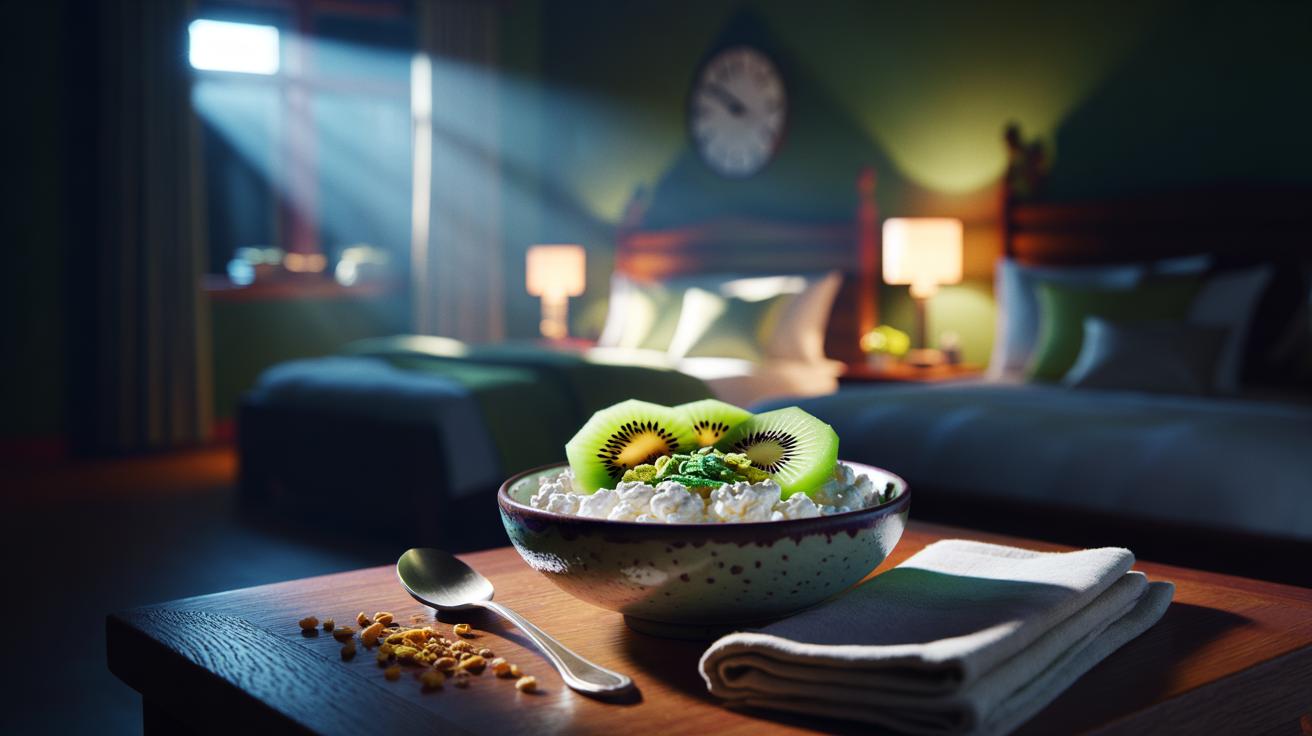
In a nutshell
- 😴 Cottage cheese + kiwi is the unexpected late‑night duo dieticians recommend to support melatonin production and smoother sleep onset.
- 🧪 The science: dairy provides tryptophan and slow‑release casein, while kiwi adds natural serotonin, vitamin C, and folate—a synergy that helps the brain shift into sleep mode.
- ⚖️ Steady blood sugar: protein‑forward, low‑GI snacking avoids the spikes and crashes caused by sweets, reducing night wakings and late‑night hunger.
- ⏰ Practical guide: aim for 120–170 g cottage cheese with 1 kiwi, eaten 60–90 minutes before bed; add a sprinkle of pistachios for extra magnesium if desired.
- 🌱 Flexible for all: options include lactose‑free cottage cheese or a high‑protein soya alternative, making the ritual accessible to intolerances and vegans.
It sounds almost counterintuitive, yet a small bowl of cottage cheese topped with sliced kiwi is becoming the late‑night snack dieticians in the UK are quietly championing. Not a biscuit, not a bar, but a cool, creamy mix that’s light, satisfying, and scientifically plausible. The reason is simple. Sleep thrives on steady blood sugar, calming amino acids, and a gentle nudge to the body’s own melatonin production. This duo does all three. It soothes evening hunger without creating the sugar peaks that jolt you awake at 3 a.m. It’s quick to assemble, costs little, and fits weeknights as easily as weekends. Unexpected? Absolutely. Effective? The evidence is mounting.
The Surprising Combo: Cottage Cheese With Kiwi
Forget the stereotype that eating before bed derails rest. The issue isn’t eating per se, but what and how much. A modest serving of cottage cheese—rich in slow‑digesting casein—releases protein steadily through the night, helping keep you full while avoiding carb crashes. Add kiwi, a naturally sweet fruit linked to improved sleep onset, and you have a snack that tastes indulgent yet behaves sensibly. UK dieticians are leaning into this pairing because it balances satiety and neurochemical support without heavy calories. This is comfort food with a clinical edge.
Cottage cheese might seem an odd bedtime pick, but its low glycaemic load, calcium content, and mild flavour make it an easy late option when appetite flickers but a full meal feels too much. Kiwi brings brightness and a whisper of acidity, cutting the creaminess and delivering natural antioxidants. It’s refrigerator‑ready, takes under two minutes to plate, and doesn’t require cooking or gadgets. Crucially, it outperforms the usual sweet fixes that spike and crash. For shift workers, students, or anyone who trains late, this duo provides a stabilising bridge to morning.
The Science Behind Sleep-Friendly Nutrients
What turns this snack from trendy to targeted is its nutrient synergy. Cottage cheese delivers tryptophan, an amino acid that the brain converts into serotonin and then melatonin, the hormone that cues sleep. Its high casein content digests slowly, sustaining energy and curbing nocturnal hunger. Meanwhile, kiwi has been associated with shorter sleep latency, thought to relate to its natural serotonin, vitamin C, and folate, plus supportive B6 for neurotransmitter synthesis. In plain terms: you’re supplying the raw materials your brain uses to switch into sleep mode.
There’s also a practical blood‑sugar angle. A protein‑forward snack gently prompts insulin, which can assist tryptophan’s passage across the blood–brain barrier without the disruptive spike from sweets. Calcium in dairy supports the tryptophan‑to‑melatonin pathway. The fibre and low glycaemic impact of kiwi help keep the whole picture steady. Compare this with chocolate or crisps, which can agitate the nervous system. Below is a simple snapshot of the combo’s standout features.
| Component | Approx. Amount (per serving) | Why It Helps Sleep |
|---|---|---|
| Casein protein (cottage cheese) | 15–20 g | Slow release, reduces night hunger; supports muscle repair |
| Tryptophan (dairy) | ~200–300 mg | Precursor to serotonin and melatonin |
| Kiwi (1 medium) | ~70–80 g | Natural serotonin, vitamin C, folate; linked to faster sleep onset |
| Calcium (dairy) | 100–150 mg | Supports melatonin synthesis pathways |
Portions, Timing, and Easy Variations
Keep it simple. Aim for 120–170 g of cottage cheese with one sliced kiwi, eaten 60–90 minutes before bed. That window allows digestion to settle while the biochemical benefits kick in. If you’re training late, add a teaspoon of crushed pistachios for extra melatonin and magnesium. Prefer it sweeter? Drizzle a half‑teaspoon of honey—no more—to avoid a sugar surge. Sprinkle cinnamon if you like warmth. The goal is calm, not overload.
For those with lactose intolerance, choose lactose‑free cottage cheese or a high‑protein soya “skyr” alternative, and keep the kiwi. Vegans can combine unsweetened soya yoghurt with chopped pistachios and kiwi to mimic the same tryptophan‑plus‑melatonin effect. Acid reflux? Scale back portion size and stop closer to 90 minutes before lights‑out. If you wake to urinate, avoid watery add‑ons and keep overall evening fluids moderate. Consistency beats perfection: the same balanced snack, most nights, trains your body to expect rest.
As late‑night rituals go, cottage cheese with kiwi is refreshingly unflashy, yet it ticks boxes that matter: steady blood sugar, sleep‑supportive precursors, and genuine satiety without heaviness. It’s budget‑friendly, child‑proof to prepare, and flexible for different diets. Small changes, large returns. That’s often how better sleep begins—quietly, in the kitchen, a few spoons at a time. If you gave this unlikely duo a two‑week trial, what differences in your bedtime routine—or your morning energy—might you notice?
Did you like it?4.5/5 (25)