In a nutshell
- 🧠 A room flip leverages prospect and refuge, stronger visual hierarchy, and curated negative space to calm the nervous system and redirect attention to restorative focal points.
- 🌞 Align furniture with light and architecture: use axes, alignments, and layered lighting so daylight flatters tasks by day and warm pools overlap at night for an instant mood lift.
- 🛠️ Practical workflow: doorway audit, pick a primary focal point, set a conversation radius (1.8–2.4 m), keep coffee table distance (35–45 cm), and aim for three light sources on dimmers.
- 🧭 Improve flow with a clear entry sightline and circulation path; small pivots in seating posture reduce glare, cut passive TV time, and make conversation natural.
- 🔄 Quick, no-buy moves—sofa 20–30 cm off the wall, rotate an armchair toward a window, swap rug orientation, place a lamp behind seating—deliver outsized mood gains in minutes.
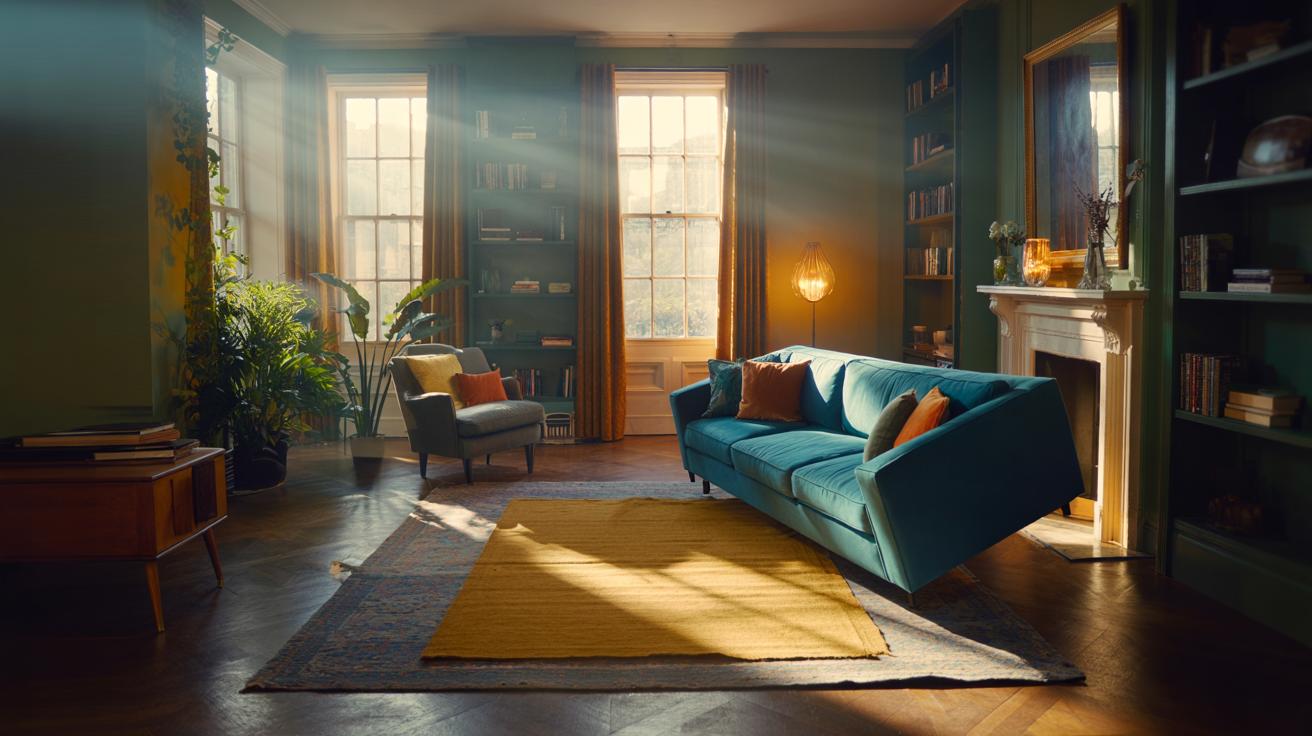
Architects have a quiet party trick. They rearrange what you already own and the room suddenly breathes. Flip the sofa, pivot the rug, shift the lamp, and your mood jumps like a dimmer sliding to bright. Why? Spatial cues act on your body long before your brain writes the story. A new circulation path invites you to move differently; a fresh focal point settles the eyes; sunlight lands where people actually sit. Change the plan and you change the feeling. This isn’t about shopping. It’s about choreography—placing furniture so light, lines and human behaviour harmonise in a way that feels unmistakably alive.
The Psychology of a Room Flip
Architects read rooms the way editors read sentences. They spot where attention stumbles, where energy drags, and where the narrative fails. A modest rotate of a chair can create prospect and refuge: open view ahead, supportive backing behind. Humans relax when they can see the room yet feel protected, so flipping a sofa off the wall and giving it a low console “back” often calms the nervous system. Comfort is not just softness; it is spatial logic that whispers you’re safe and in control.
There’s also visual hierarchy. In many living spaces, the television steals top billing by default. Switch the anchor to a window, fireplace or book wall and you redirect daily attention to something restorative. The result is a subtle lift in mood because the eye lands on meaning, not noise. Architects also carve out negative space, the edited gaps that let objects breathe. Removing a side table can be more potent than adding one. Space you don’t fill often does the heaviest emotional lifting.
Then comes movement. A clear entry sightline that ends at a plant, artwork or natural light gives the arrival moment a destination, like a period at the end of a sentence. You feel oriented, not adrift. Flipping layouts to create such paths reduces low-grade stress and encourages gathering where conversation feels easy, not forced. Small tweaks, big effects.
Light, Lines, and the Way You Look
Light is medicine, and furniture is how you dose it. Turn seating ninety degrees and you may suddenly catch sky instead of glare. Angle a desk so daylight washes from the side, not the front, and your face relaxes. Architects think in axes and alignments: if the coffee table lines up with the window mullion and rug edge, the room reads as intentional. If not, it feels itchy. When lines agree, your mind quietens. They also tune lamp heights so pools of warm light overlap, creating a gradient that flatters skin and softens corners at dusk, a proven morale booster after grey British afternoons.
| Layout Move | Likely Mood Effect | Time Cost |
|---|---|---|
| Sofa off wall by 20–30 cm | Refuge, richer acoustics | 10 minutes |
| Rotate armchair toward window | Light exposure, calmer mornings | 5 minutes |
| Swap rug orientation | Clear axis, better flow | 8 minutes |
| Move lamp behind seating | Layered lighting, softer evenings | 7 minutes |
Posture matters, too. A sofa facing slightly past the TV—not directly at it—reduces passive bingeing and nudges conversation. Align dining chairs so no one stares into a blank wall; give them art, greenery, or light. People look where furniture points them. By redirecting sightlines toward nature or texture, you lift the ambient mood without changing a single object, only its place and purpose.
Practical Ways to Flip Without Buying Anything
Start with a fast audit. Stand at the doorway and film a slow pan. Where does your eye snag? That’s the clutter point. What feels dead? That’s the opportunity. Next, sketch the room and draw two bold lines: one from entry to focal point, one across your main conversation zone. Your task is to free those lines. If a piece blocks flow, it moves—no debate.
Now deploy three architect tricks. First, anchor with a primary focal point (view, fire, art). Aim the longest seating piece toward it, not necessarily straight-on; a 10–15 degree angle often looks relaxed. Second, set a conversation radius: 1.8–2.4 metres between farthest seats, coffee table 35–45 cm from the sofa front. This keeps voices warm and reaching distance easy. Third, layer light: one overhead on dimmer, one task, one glow. Three sources create evening magic.
Test-drive the flip. Sit, read, watch five minutes of something, take a call. Feel for drafts, glare, echo. Slide the rug so its long edge runs with the room’s longest line. Tuck a narrow table behind the sofa to “finish” the back. Edit accessories until surfaces show more timber or stone than objects. You’ll sense it click. The room exhales. So do you.
Rearranging isn’t cosmetic; it’s cognitive. You’re rewriting patterns your body repeats daily, swapping friction for flow, noise for clarity. A good flip amplifies light, simplifies movement and reclaims focus for the things that nourish you—books, people, views, rest. The quickest way to feel different at home is to sit somewhere new and look at something better. So, what would happen if you turned the sofa, freed the window and let the room show you its best angle today—where might your mood land if you tried it this weekend?
Did you like it?4.4/5 (30)