In a nutshell
- 🔢 The 5-4-3 method: 5-minute parboil in salted, slightly alkaline water; 4 tbsp fat per kg; 3-stage roast to set crust, drive off moisture, and fix texture.
- 🧪 Science-led crispiness: Surface starch gelatinises and roughs up for more surface area; hot fat powers Maillard reactions while internal steam keeps centres fluffy.
- 🥔 Prep that matters: Use floury spuds (Maris Piper, King Edward), cut large, steam-dry, and start in shimmering preheated fat; roast at 230°C, then 200°C, then 170–180°C, turning for even colour.
- 🧈 Fat and flavor: Goose/duck fat for depth, rapeseed oil for clean crunch, or beef dripping; infuse with garlic/herbs, finish with flaky salt, rosemary, pepper, or lemon.
- 🧰 Troubleshooting & variations: Don’t crowd; add heat/fat if pale; avoid waxy potatoes; air-fryer workflow (200°C, 18–25 min); make-ahead and re-crisp at 220°C; vegan-friendly blends work well.
Britain’s Sunday roast lives or dies by the potato. Shattering exterior. Fluffy middle. That coveted crunch you hear across the table. After years of tinkering, several top chefs now whisper the same mantra: the 5-4-3 method. It’s not a gimmick; it’s a neat, memorable framework that locks in technique and timing, whether you’re cooking for two or a festive crowd. Five minutes sets the starch. Four tablespoons of fat per kilo fuels colour and crunch. Three heat phases create structure without drying the centre. The result is repeatable, restaurant-level crispness in a home oven. Here’s how to master it — and why it works every single time.
What Chefs Mean by the 5-4-3 Method
The shorthand is simple and powerful. The “5” stands for a five-minute parboil in well-salted, slightly alkaline water (a pinch of baking soda per litre). That brief simmer gelatinises surface starch, making it sticky enough to form a rugged shell once roughed up in the colander. The “4” refers to roughly four tablespoons of hot fat per kilogram of potatoes. Chefs like goose fat for flavour, but neutral rapeseed oil gives clean crunch and suits mixed diets. The “3” signals a three-stage roast: a fierce blast to set the crust, a middle stretch to drive off moisture, and a gentler finish to set texture.
Think ratio, not ritual: dial in the numbers, then adjust to your oven. Crucial details matter — cut potatoes large (6–7 cm), space them well, and preheat the tray until the fat shimmers. Those micro-decisions stop sogginess before it starts.
| Number | Action | Why It Works |
|---|---|---|
| 5 | Parboil 5 minutes in salted, alkaline water | Gelatinises starch, creates a tacky surface for crunch |
| 4 | Use 4 tbsp hot fat per kg potatoes | Even coating, rapid browning, distinctive flavour |
| 3 | Roast in 3 heat phases | Sets crust, drives off moisture, fixes texture |
The Science Behind Crispiness: Starch, Steam, and Fat
Crisp roast potatoes hinge on managing starch and water. The brief alkaline parboil breaks down pectin and nudges amylose to the surface, so the edges turn furry. Those tiny ridges behave like a natural breadcrumb, increasing surface area that fries in fat. Inside, trapped steam fluffs the crumb. Outside, hot oil keeps temperatures above 140°C at the interface, accelerating Maillard reactions. No dry edges, no crunch; no steam, no fluff. The 5-4-3 method simply schedules these processes in the right order.
Fat choice shapes both flavour and physics. Goose or duck fat deliver luxurious depth and resilient crusts. Beef dripping is classic and robust. For a vegan option, refined rapeseed or sunflower oil with a knob of plant butter for aroma performs brilliantly. Seasoning is more than salt: a whisper of garlic and thyme can infuse from the tray, while a final dusting of flaky salt preserves crunch. Airflow matters too; fan ovens speed evaporation, but even in conventional ovens, wide spacing and a preheated tray ensure the potatoes fry, not steam.
Step-by-Step: From Pan to Tray to Table
Start with floury spuds — Maris Piper or King Edward — peeled and cut into large chunks. Rinse briefly to lift surface starch, then simmer in 1.5% salted water with 1/2 teaspoon baking soda per litre for five minutes. Drain, return to the pot, and shake until the edges look fluffy. Leave uncovered for a minute to steam-dry. Meanwhile, heat a roasting tray with four tablespoons of your chosen fat per kilo at 230°C (fan 210°C). The fat must be shimmering. Cold fat equals soggy potatoes.
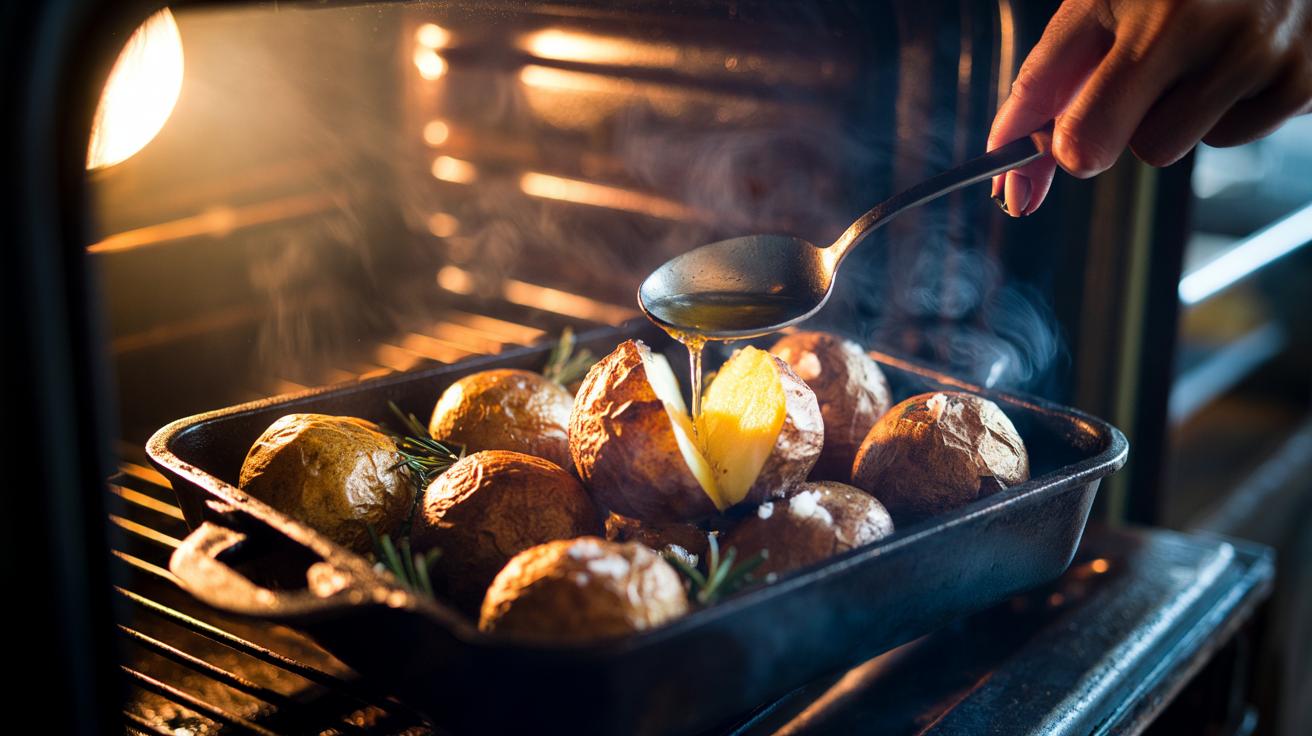
Tip in the potatoes carefully; baste so every piece glistens. Roast 20 minutes at 230°C, turning once to prevent sticking. Drop to 200°C for 25–35 minutes, turning again for even colour. Finish at 170–180°C for 10 minutes to set the crust and render any lingering moisture. Season with flaky salt as they come out, then rest two minutes on a rack-lined tray for air circulation. Optional: toss with a spoon of chopped rosemary, a crack of black pepper, and a squeeze of lemon for brightness. Serve immediately, and listen for the crunch.
Troubleshooting and Variations for Every Kitchen
If the centres feel tight, you’ve likely under-parboiled or used waxy varieties. Stick to floury potatoes and that precise five-minute simmer. Pale sides? You needed more heat or more fat: preheat longer, or increase to five tablespoons per kilo for very large trays. Crowding is the silent killer; use two trays rather than layering. For flavour, infuse fat with smashed garlic and herbs in the oven for five minutes, then remove the garlic so it doesn’t burn. Season at the end to preserve the brittle crust.
Air fryer? Scale down: 5-minute parboil, 2–3 tablespoons of oil per kilo, then 200°C for 18–25 minutes in a single layer, shaking twice. Make-ahead for feasts by fully roasting to pale gold, cooling, and chilling on a rack. Re-crisp at 220°C for 12–15 minutes on the day. For dietary needs, blend 3 tablespoons rapeseed oil with 1 tablespoon neutral vegan butter for flavour. Fancy finishes include smoked salt, confit garlic oil, or a dust of fennel seed. Remember: smaller pieces cook faster but lose fluff; stay chunky for a dramatic, pub-worthy bite.
When chefs talk about the 5-4-3 secret, they’re offering a map: manage starch, feed the crust, stage the heat. It’s flexible, forgiving, and ideal for busy kitchens. Adjust the fat to your taste, choose your oil with intent, and trust the timings. Give the potatoes space, and they reward you with a symphony of crackle and creaminess. From weeknight comfort to Christmas centrepiece, this method delivers. Which twist will you try first — rich goose fat, herb-scented rapeseed, or a citrus finish to cut through the roast?
Did you like it?4.4/5 (24)