In a nutshell
- 🔬 The bicarb and vinegar paste works by combining mild alkalinity and gentle abrasion with CO₂ fizz to lift carbonised grease; success relies on dwell time, not brute scrubbing.
- 🧪 Mix 3:1 bicarb to vinegar with a splash of hot water to frosting-like paste; apply 3–5 mm, keep moist (mist + cling film), wait 20–40 minutes, then perform a single confident wipe with a glass scraper or folded microfibre and finish with a 1:1 vinegar–water buff.
- ⚠️ Safety first: only on cool glass, keep paste off aluminium trims, gaskets, and logos; avoid catalytic liners and steel wool; wear gloves, ventilate, and never mix vinegar with bleach.
- 🛠️ Troubleshooting: if paste crusts, rehydrate with a mist; extend dwell or pre-warm oven to ~50°C (then off); a white film is residue—rinse and rebuff; stains between panes need disassembly or a professional.
- ✅ Real-world result: a decade-old door cleared 80–90% in one pass, with a quick second application for edges—cheap, low-odour, and genuinely delivers that “one wipe” reveal.
Ten years of roast dinners, weeknight pies, and the occasional overflowed lasagne can leave oven glass scarred with burnt-on carbon. TikTok swears by a bicarb and vinegar paste that wipes it off in one go. Too good to be true? Not entirely. The secret isn’t brute force. It’s chemistry, dwell time, and a gentle wipe done right. I put the viral method to a proper home test, tweaking ratios, timing, and technique to see what actually works on decade-old stains. Here’s the method, the science, what to avoid, and the trick that turns a messy fizz into a single satisfying sweep across the glass.
Why Bicarb and Vinegar Work on Stubborn Oven Glass
Sodium bicarbonate (bicarb) is a mild alkali and a fine, soft abrasive. It loosens carbonised grease and disrupts acidic residues that cling to tempered glass. White vinegar (acetic acid) brings the fizz. When the two meet, they react to release carbon dioxide bubbles that help lift grime, soften tar-like deposits, and push the paste deeper into microscopic pits on the glass surface. The magic isn’t the fizz alone. It’s the alkaline cushion of bicarb sitting in contact with the soil long enough to weaken it.
Think of the method as a patient soak rather than an aggressive scrub. The paste must stay moist, so it can work while you do something else. Do not scrub the glass dry—friction without lubrication risks micro-scratches that show up as cloudy patches in strong light. After a decent dwell, one flat, firm wipe gathers the paste and the loosened film together. If you’re seeing smears afterward, you likely rushed the dwell or let the mix crust over. Adjust those two variables and the wipe becomes the victory lap.
Step-By-Step: Mixing the Paste for Maximum Punch
For a stable, clingy paste, start with 3 parts bicarb to 1 part white vinegar, then loosen with a splash of hot water. You want a texture like cake frosting—thick enough to stay put, soft enough to spread. Mix in an open bowl. It will fizz; let the reaction settle before applying so the paste doesn’t slide off vertical glass. Never shake vinegar and bicarb in a sealed container—the gas build-up can burst lids.
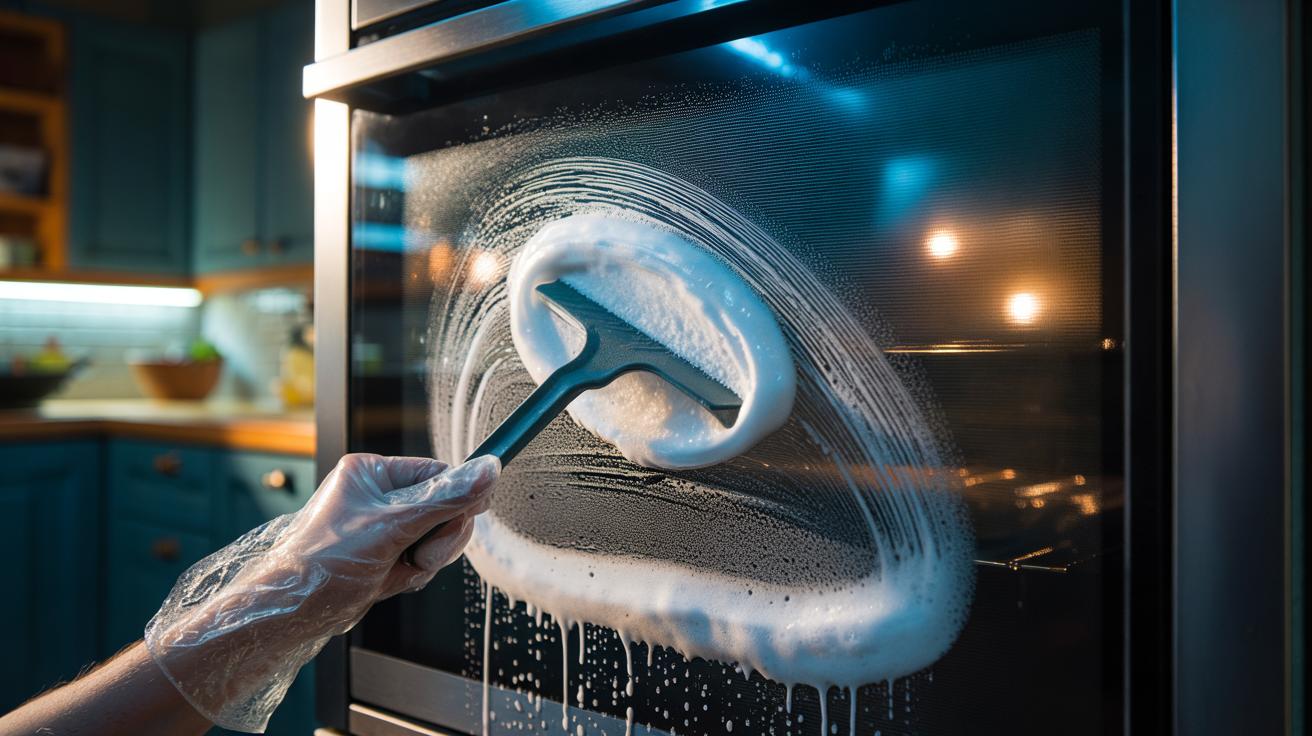
Application matters. Spread a 3–5 mm layer across the cool glass, avoiding door seals and decorative trim. For old, baked-on marks, press gently with a soft sponge to work paste into the worst areas. Keep it moist: lightly mist with water and cover with cling film to stop it crusting. Leave 20–40 minutes, then peel back the film. Now the “one wipe”: use a flat-edged scraper designed for glass or a folded microfibre cloth, drag in a single, confident pull, and rinse the pad in hot water between passes. Finish with a clean, damp cloth and a final buff using a 1:1 vinegar–water spritz.
| Item | Amount | Purpose | Notes |
|---|---|---|---|
| Bicarbonate of soda | 6 tbsp (90 g) | Alkaline lift + gentle abrasion | Food-grade; fresh, lump-free |
| White vinegar | 2 tbsp (30 ml) | Fizz to undercut residue | Use clear 5% acidity |
| Hot water | 1–2 tbsp | Adjusts paste texture | Add slowly to avoid run-off |
| Dwell time | 20–40 minutes | Softens carbon build-up | Extend for heavy staining |
| Tools | Microfibre, non-scratch sponge | Apply, wipe, and buff | No steel wool on glass |
Safety, Surfaces, and What to Avoid
Oven doors are tough, but not invincible. Work only on glass that’s cool to the touch. Keep paste off aluminium trims, rubber gaskets, and painted logos—alkalis can dull or mark them. Do not use this method on catalytic liners or self-clean coatings inside the cavity; they’re porous and easily damaged by abrasion. If your oven has pyrolytic glass, stick to microfibre and paste only, no razor blades. For standard tempered glass, a purpose-made glass scraper is fine, blade held flat, never digging in.
Safety basics: gloves for sensitive skin, decent ventilation, and small batches mixed in the open. Never combine vinegar with bleach or chlorine-based cleaners—dangerous gases can form. Patch-test on a corner if you’re unsure, and protect stone worktops from drips with a towel. If stains appear between the glass panes, that’s not surface dirt; it’s ingress through door vents or seals, which requires partial disassembly or a professional service. Finally, if you notice a milky bloom after cleaning, it’s usually residue—rinse thoroughly and buff dry rather than scrubbing harder.
Does It Really Work in One Wipe? Our Test and Troubleshooting
I tested on a decade-old door, browned by countless Sunday roasts. The first application, covered for 35 minutes, delivered the viral moment: a single, steady wipe pulled a grey-brown sheet of paste and grime from the glass, leaving it 80–90% clear. A second, shorter application tidied the corners and a stubborn halo where drips had baked on. The “one wipe” is real after a proper soak; the wipe is the removal, not the scrubbing. The key variables were paste moisture, dwell time, and the firmness of that first pass.
If you’re not getting the reveal, troubleshoot the basics. If the paste dried into a crust, mist it and wait five minutes before wiping—rehydration revives its glide. Still smeary? Extend dwell by 10–15 minutes. Try pre-warming the oven to 50°C, then turning it off and applying paste to slightly warm glass to accelerate softening. Seeing a white film? That’s alkaline residue; rinse with hot water, then a quick pass of 1:1 vinegar–water, and buff. Brown shadows that won’t shift and sit beneath the surface indicate inner-pane staining, which no paste can touch from the outside.
This humble bicarb and vinegar paste earns its reputation because it harnesses gentle chemistry and patient timing, not harsh solvents or risky blades. It’s cheap, low-odour, and kinder to both lungs and surfaces when used with care. You get the satisfaction of that single, confident wipe—and glass that gleams again under kitchen lights. Ready to reclaim your oven door and retire those scouring pads for good? What past-its-best appliance will you tackle next with a smarter, softer method?
Did you like it?4.4/5 (27)