In a nutshell
- 🌱 Scientists spotlight a water-harvesting hydrogel—often sodium polyacrylate or bio‑based cellulose—that stores moisture and slowly releases it, helping houseplants stay perky for days between waterings.
- 💧 It works via osmotic pressure and capillarity, buffering wet–dry swings; some variants even scavenge humidity, delivering steadier hydration and reducing stress in thirsty species like Calathea and Ficus.
- 🛠️ Practical use: pre‑hydrate crystals, then mix roughly 5–10% by volume into potting mix, ensure ample drainage, adjust dose for light and temperature, and avoid overdosing in cool, dim spots.
- ⚠️ Safety and sustainability: choose horticultural grade gels (skip craft beads), keep away from pets, dispose responsibly; consider bio‑based options to cut petrochemical footprint.
- 💷 Cost and sourcing: inexpensive and reusable for many cycles—check absorption capacity in saline conditions, suitable particle size (0.5–3 mm), and lifespan; trial on one plant before scaling up.
Forget guilt and drooping leaves. Scientists have singled out a water-harvesting hydrogel that tucks into potting mix and quietly quenches roots while you’re busy living your life. Think of it as a microscopic sponge network that stores moisture, then hands it back as the soil dries. Some variants even sip moisture from indoor humidity overnight. The promise is simple: greener foliage, fewer watering cans, less stress. It’s not sci‑fi, and it’s not just for botany labs. Reformulated from materials already used in agriculture, this “magic ingredient” aims to stabilize the erratic wet–dry cycles that kill or stunt houseplants. Here’s how it works, what to buy, and how to use it without turning your beloved Monstera into a swamp.
What Is the Water-Harvesting Hydrogel?
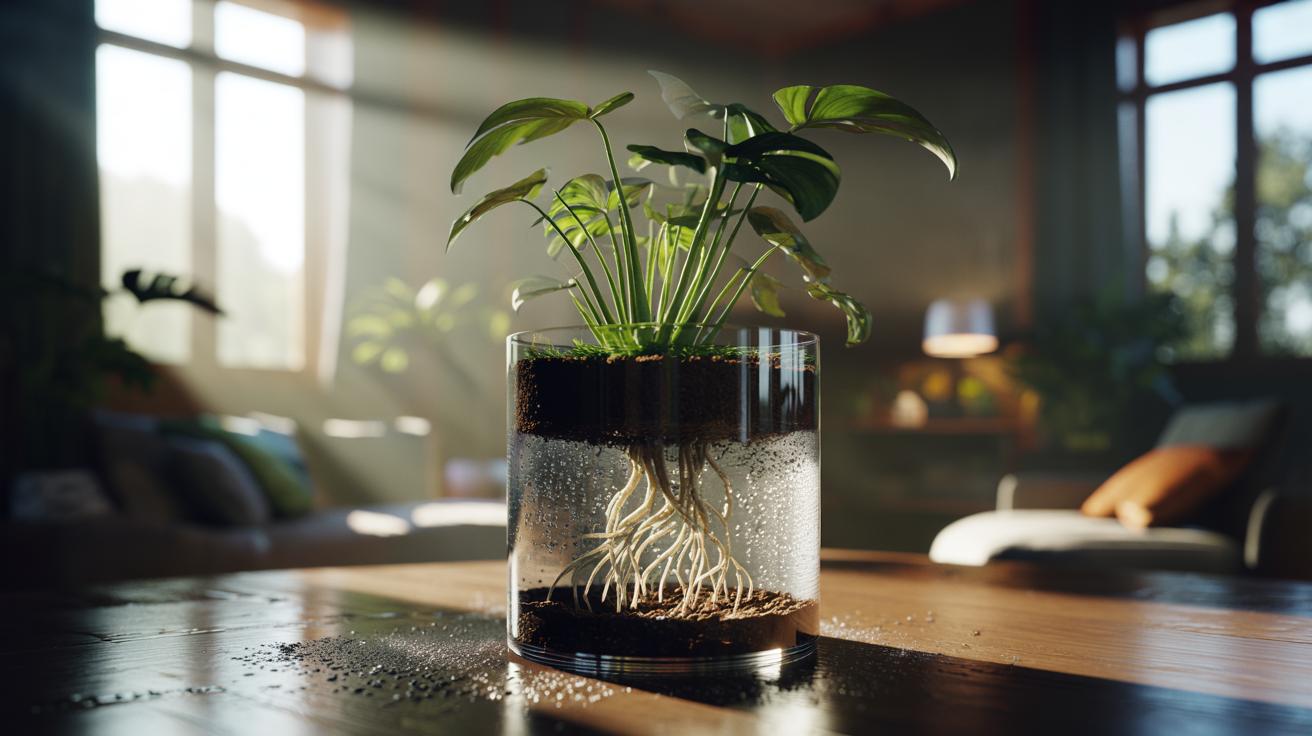
The core ingredient is a hydrogel, a cross‑linked polymer network—often sodium polyacrylate or a bio‑based cellulose variant—that absorbs water far beyond its mass. In horticultural form, it swells into soft granules dispersed through soil, creating thousands of tiny reservoirs. The latest twist is air‑interactive designs: composites or coatings that can pull small amounts of water from ambient humidity, then release it under plant‑friendly conditions. That’s why some pots keep perky even when you skip the can for days. Not all beads are equal; cheap craft “orbs” aren’t engineered for soils, nutrient exchange, or root safety. Look for horticultural grades with clear labeling and safety data.
In lab demos, scientists show hydrogels capturing nighttime moisture pulses and daytime condensation along pot walls, buffering plants through mini droughts. Picture a self‑replenishing pantry at root level. It doesn’t replace water forever—physics still applies—but it stretches intervals dramatically. Houseplants prone to sulking between weekly waterings, like Calathea or Ficus, benefit most. The gel’s role is storage and timing, not fertiliser, so you still feed as normal. The result: steadier hydration, fewer roller‑coaster stresses, stronger growth.
| Type | Water Source | Reusability | Typical Lifespan |
|---|---|---|---|
| SAP crystals (sodium polyacrylate) | Watering + soil moisture | Yes (many cycles) | 12–36 months in pots |
| Bio‑based cellulose hydrogel | Watering + humidity buffering | Yes (many cycles) | 6–24 months, faster biodegradation |
| Air‑harvesting composites (lab‑grade) | Ambient humidity + watering | Experimental | Under study |
How the Magic Ingredient Works in Soil
Hydrogels thrive on gradients. When you water, the particles expand and lock up a portion of moisture. As the pot dries, osmotic pressure and capillarity reverse the flow, easing water back toward roots. Some gels are lightly hygroscopic, scavenging micro‑doses from indoor air that condense along cooler soil layers at night. Think of micro reservoirs opening and closing as temperatures and humidity swing through the day. It’s a slow drip, not a flood.
This buffering smooths the brutal peaks and valleys of typical houseplant care. Most damage isn’t caused by one missed watering, but by repeated extremes that collapse fine root hairs. By providing a stable moisture backbone, hydrogels help roots branch deeper and maintain the delicate biology that drives nutrient uptake. Trials in controlled rooms show longer turgor retention and reduced leaf curl, especially in thin‑leaved species. For succulents, the benefit is smaller but real: better uniformity, fewer shrivel points.
There are limits. In a sealed, dark corner, nothing evaporates, and oxygen dwindles. Overpacked pots can become too wet. Hydrogels are smart sponges, not miracle workers. They need drainage, light, and air movement to perform. Pair them with a porous mix and sensible watering to unlock their full, plant‑saving potential.
Practical Setup: Mixing Ratios, Pots, and Light
Start simple. Pre‑hydrate the crystals so you don’t accidentally create a pudding. Soak for 15–30 minutes until fully swollen, then strain off excess water. For general houseplants, blend roughly 5–10% pre‑hydrated gel by volume into fresh potting mix; for small pots (under 12 cm diameter), lean toward 5%. For thirsty foliage plants or warm rooms, edge closer to 10%. Always ensure generous drainage holes.
Repotting? Layer a thin band of gel‑mix in the root zone rather than at the base. Top‑dressing also works: fork a centimeter of gel‑mix into the upper 3–4 cm of soil, avoiding root damage. Water thoroughly once, then wait. The pot will feel heavier; that’s stored insurance, not a cue to water again. Use a finger test or moisture meter at mid‑depth. When it reads dry, water as normal—but expect the gap between waterings to stretch by days, sometimes a week or more.
Lighting matters. In bright, warm spots, evaporation accelerates and the gel cycles actively. In cool, dim corners, reduce the dose to prevent lingering sogginess. For self‑watering planters, cut hydrogel rates in half; the reservoir already buffers moisture. If leaves yellow from chronic wetness, you’ve overdosed or under‑lit. Adjust mix, improve aeration with perlite or bark, and right‑size the pot.
Safety, Costs, and Environmental Questions
Are hydrogels safe? Horticultural‑grade sodium polyacrylate is broadly considered inert in soil when used as directed. Choose products free from dyes and fragrances, and keep granules away from pets and curious toddlers. Bio‑based options, made from cellulose or starch‑grafted polymers, offer a gentler end‑of‑life profile. Do not flush gels down drains; dispose with household waste or mix exhausted material into outdoor beds where soil biology can break it down over time.
What about microplastics? Cross‑linked SAPs aren’t a classic microplastic source in the way films and fibres are, but they are petrochemical‑derived and degrade slowly. That’s why many growers are pivoting to bio‑based gels where available. If you travel often or manage a large plant collection, the water savings and plant survival may outweigh the footprint of a small dose in each pot. Cost is modest: a few pounds buys enough crystals for several containers, and the material cycles hundreds of times before performance fades.
Sourcing tips: read the technical sheet, not just the marketing. Look for stated absorption capacity in saline conditions (more realistic than distilled water), particle size suitable for pots (0.5–3 mm), and a lifespan estimate. Clarity beats hype. If in doubt, test on one plant for a month, taking notes on weight, wilting, and leaf sheen. Your data will tell you when, and how far, to scale up.
This quiet revolution in pot care is less about gadgetry and more about physics tuned to plant rhythms. A handful of water‑harvesting hydrogel shifts the balance from crisis watering to steady, forgiving hydration. That means fewer casualties, bolder growth, and weekends away without the frantic neighbour text. The trick is choosing a horticultural grade and using it thoughtfully. If a simple sprinkle could buy your fern an extra week of comfort, would you try it—and which plant in your home would you trust to take the first sip?
Did you like it?4.4/5 (22)