In a nutshell
- ⚡ A 10-minute daily stretching routine boosts energy by improving blood flow, breathing mechanics, and posture—no gym required.
- 💨 Long, nasal exhales activate the parasympathetic system, reducing tension and brain fog while easing tight fascia so everyday movement feels lighter.
- 📋 The sequence covers breath, neck, chest, spine, hips, calves, wrists, and a twist—e.g., diaphragmatic breathing, doorway pec stretch, cat–cow, hip flexor and hamstring work—timed holds split side to side.
- 🛡️ Form and safety first: aim for mild tension, breathe 4–6, avoid bouncing, and stop with sharp pain or pins and needles; special notes for pregnancy and hypermobility.
- 🔁 Turn it into a habit by anchoring to daily cues, adding micro-doses, and tracking range or comfort; consistency beats intensity for sustainable energy gains.
Feeling sluggish by mid-morning? Doctors now advise a compact fix you can do anywhere: a 10-minute daily stretching routine that primes circulation, calms the nervous system, and unties desk-bound knots. No gym, no kit, no sweat-soaked commute. Just deliberate movements that restore range in the hips, spine, and shoulders while teaching the breath to lead. The aim isn’t contortion; it’s consistency. Done well, this routine lifts posture, reduces stiffness, and nudges energy back into your day without boosting stress hormones. Think of it as hygiene for your joints and fascia, a small practice that compounds into clearer focus and steadier vitality.
Why Stretching Fuels Everyday Energy
Energy is not only about sleep and coffee. It’s also about blood flow, joint freedom, and how efficiently the body can breathe. When we sit for hours, tissues shorten and slide less. The result: restricted chest, clenched hips, a spine that stops rotating. That stiffness makes breathing shallow and movement costly. Gentle, regular stretching reverses the script, encouraging oxygen delivery to sleepy muscles and easing the tug-of-war between tight chains of fascia. A flexible system spends less energy fighting itself. Even a few minutes of mindful mobility lowers perceived exertion, so the same tasks feel lighter.
There’s also the nervous system. Slow holds with a long exhale favour the parasympathetic response—your “rest and digest” setting—reducing tension signals from muscle spindles. Shoulders drop. Jaws unclench. Brain fog lifts because the chest can expand and the diaphragm can do its job. Clinicians see side benefits too: fewer tension headaches, steadier posture, better balance. Small, daily doses beat heroic, once-a-week efforts. Think of these minutes as a circuit-breaker for modern life. You’re not training for the splits; you’re restoring the range your body expects for walking, reaching, and thinking clearly.
The 10-Minute Routine Doctors Recommend
This sequence moves from breath to neck, chest, spine, hips, and ankles, then finishes with wrists and a gentle twist. Hold each stretch lightly; aim for a mild, sustainable tension, never pain. Breathe in through the nose, out longer than the inhale. If you’re new, start at the low end of each hold. If you have injuries, osteoporosis, or recent surgery, check with your GP or physio first. Stop immediately if you feel sharp pain, numbness, or pins and needles. The order matters: we open the front line, mobilise the spine, then free the hips and calves that carry your day.
| Time | Move | Target Area | Key Cue |
|---|---|---|---|
| 45s | Diaphragmatic breathing (hook-lying) | Core/diaphragm | Hand on belly; exhale longer |
| 60s | Neck lateral stretch | Upper traps | Ear to shoulder; shoulders heavy |
| 60s | Doorway pec stretch | Chest/shoulders | Elbow at 90°; step through |
| 45s | Thoracic extension over chair | Upper back | Support head; open ribs |
| 60s | Cat–cow (gentle) | Spine | Slow waves; no forcing |
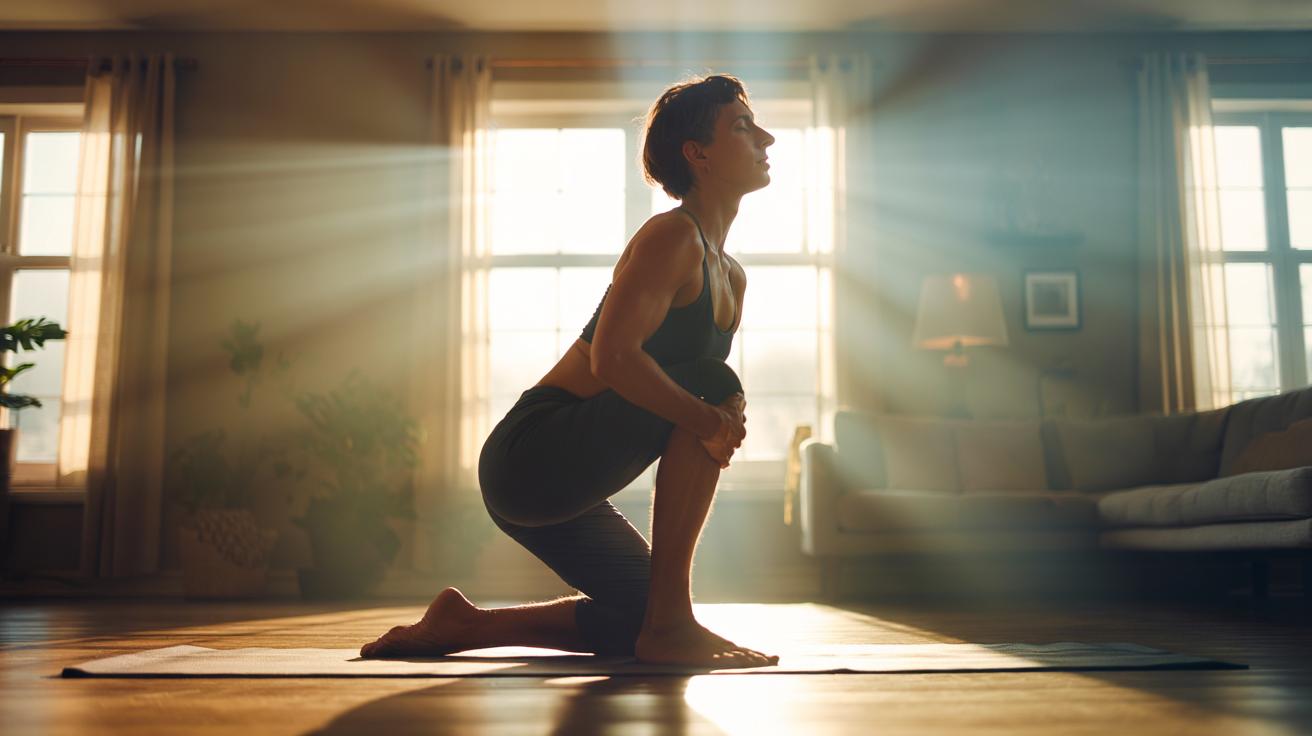
| 90s | Half-kneeling hip flexor | Front of hip | Tuck pelvis; tall torso |
| 90s | Hamstring hinge | Back of thigh | Long spine; toes up |
| 60s | Calf wall stretch | Gastrocnemius/soleus | Heel heavy; knee soft |
| 45s | Forearm flexor/extensor | Wrists | Elbow straight; gentle pull |
| 45s | Supine spinal twist | Lower back | Arms wide; breathe into ribs |
Split side-to-side holds evenly (about 20–30 seconds per side). Keep the face relaxed. If kneeling is uncomfortable, place a cushion under the knee or use a standing variation. For the pec stretch, adjust arm height to find the angle that opens your chest without pinching the front of the shoulder. The goal is gentle length plus easy breath. Over days, tension eases quicker and your baseline posture improves. Pair this routine with regular walking for a simple, doctor-approved formula: move often, breathe well, and keep tissues supple.
Form, Breathing, and Safety Cues
Quality beats quantity. Anchor each position with a neutral spine, soft knees, and a jaw that feels unhurried. Think “long through the crown”, not “lean further”. Breathe in for four, out for six, letting the ribs expand sideways like a cylinder. This cadence reduces sympathetic drive and invites length without a fight. If your breath is strained, the stretch is too deep. For the hips, tuck the pelvis gently before moving forward; it targets the hip flexors rather than your lower back. In hamstring work, hinge from the hips, not the waist, and keep the back flat.
A few red flags: pins and needles, joint locking, or sharp pain mean stop and reset. Avoid bouncing. Replace intensity with patience; a 30-second calm hold outperforms a painful 10-second yank. Those with hypermobility should emphasise light end-range engagement rather than chasing extra range. If you’re pregnant, steer clear of deep end-range spinal twists and extreme backbends; choose open, supported positions. Consistency builds capacity, and capacity feels like energy. The cleaner your form, the quicker the nervous system grants access to new range—and the more refreshed you’ll feel afterwards.
Turning a Quick Stretch Into a Habit
Routines stick when they’re obvious and tiny. Attach this one to anchors you already do: kettle on, stretch; video call ends, stretch; news at ten, stretch. Lay out a cushion by your desk as a cue. Use a one-song rule on busy days. Or double it on slow Sundays. Make it easier than skipping it. Morning sessions wake the chest and hips before commuting. Midday works for desk-breakers. Evenings help downshift from a wired day so sleep comes faster. The benefits stack: fewer aches, faster walking cadence, steadier mood.
Track what changes. Can you turn your head further when checking traffic? Do stairs feel smoother? That’s your compliance report. Add micro-doses between meetings: a 20-second pec opener, two deep nasal breaths, a slow neck glide. If a move irritates a joint, swap it—not all bodies like the same angles. Office workers might prioritise pecs, hip flexors, and calves. Runners may linger on hamstrings and ankles. Consistency beats intensity every time. After a fortnight, most people notice lighter mornings and less afternoon drift—proof that small, targeted mobility props up real-world energy.
This is not a miracle; it’s mechanics working in your favour. Ten quiet minutes restore glide to the tissues that move you, open space for the diaphragm, and steady the nervous system so effort feels easier. Pair it with brisk walks and decent sleep for a simple energy policy you can actually keep. No gym, no guilt—just a daily reset. Ready to test it for a week, track how you feel by midday, and adjust the holds to suit your body’s story—what would your first small tweak be?
Did you like it?4.7/5 (23)