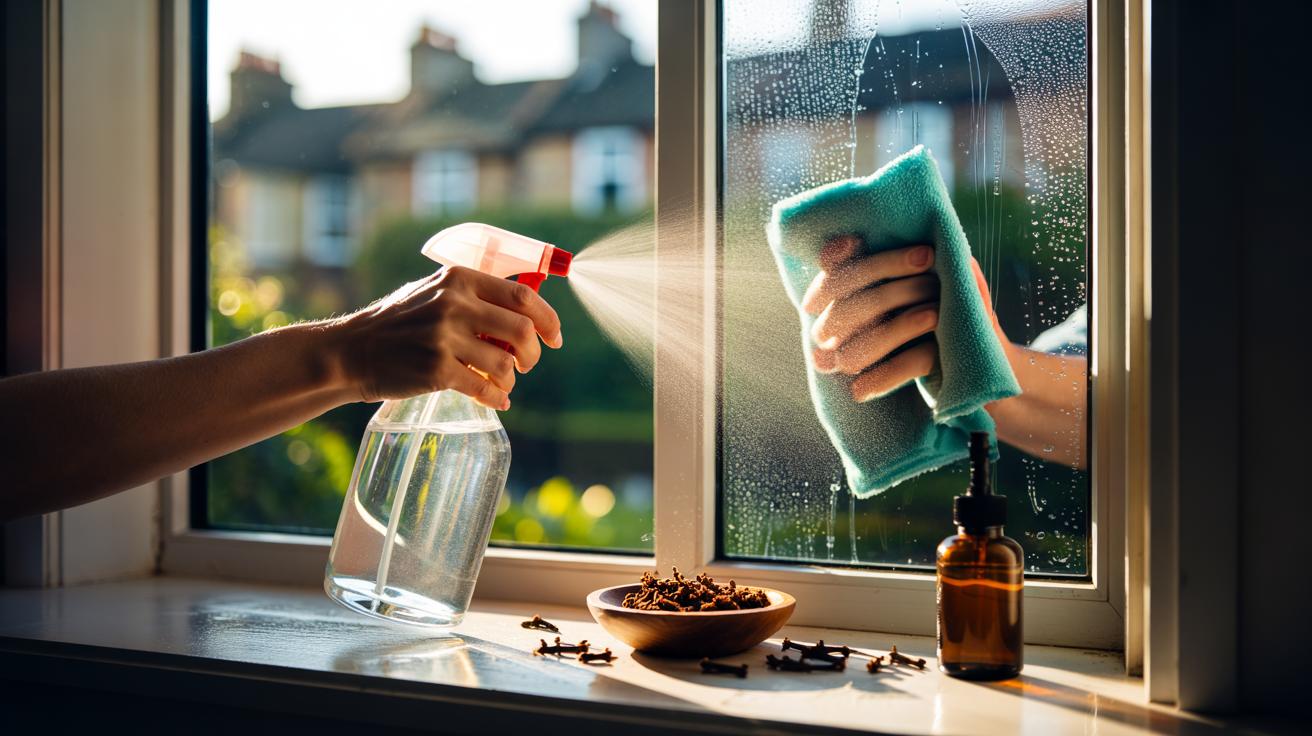
In a nutshell
- 🍃 Clove outperforms vinegar on glass thanks to eugenol, delivering a streak-free finish, a warmer scent, and mild anti-mould benefits when carried by fast-evaporating alcohol and distilled water.
- 🧪 DIY spray recipe: 250 ml distilled water + 250 ml methylated spirits (or vodka), 1–2 drops clove oil or a strained clove infusion, 1 drop mild detergent, optional 1/2 tsp cornstarch—shake, label, and strain well.
- 🪟 Technique tips: work cool and overcast, mist lightly, use a clean-edge squeegee top-down or a two-cloth microfibre method, finish with crossed strokes, and spray onto the cloth near seals to avoid overspray.
- 🛡️ Safety: patch-test surfaces, keep off varnish and fresh paint, don’t mix with ammonia, ventilate lightly, wear gloves if sensitive, and avoid acrylic panes or tinted automotive films.
- 💷 Benefits: rapid clarity without vinegar odour, cost-competitive and refillable, lower waste than aerosols, and easy weekly maintenance for showers, patio doors, and bay windows.
Britain’s homes love a shortcut, but the sharp tang of vinegar has never been everyone’s cup of tea. This year’s hush‑hush hack comes not from the cleaning aisle but the spice rack. The unlikely hero? clove. Harnessed correctly, it delivers a streak-free shine, tames window grime, and keeps damp-season nasties at bay. No fog of fumes. No eye-watering whiff. Just crisp, gleaming panes. The science is simple, the method is forgiving, and the results, if you follow a few pro moves, are startling. Curious how a festive spice beat a household staple at its own game? Here’s the recipe, the technique, and the reasoning that makes it work.
Why Clove Beats Vinegar on Glass
Clove’s secret weapon is eugenol, an aromatic compound prized by dentists and perfumers for its antimicrobial and solvent properties. On windows, a tiny dose, carried by fast-evaporating alcohol, helps lift greasy films that smear under water alone. Vinegar’s acidity bites at limescale, yes, but it can also etch sensitive finishes and leaves a telltale scent that lingers in small UK flats. Clove, by contrast, brings a warm, winter-market note and—crucially—discourages the mould that loves to colonise cold frames and rubber seals.
Used sparingly in the right carrier, clove helps produce a crisp, streak-free finish without the sour aftersmell. It shines in older properties where condensation builds, and in coastal homes where salt haze sits stubbornly on glass. Because the solution relies on distilled water and alcohol, it evaporates cleanly, so fewer tide marks. The low-surfactant formula also means less residue to buff away. One caveat: essential oils and soft plastics don’t always get along. Keep overspray off acrylic panes and painted sills, and always test an inconspicuous corner before going large.
The Clove Window Spray Recipe
The blend is simple and inexpensive. The goal: quick flash-off, minimal residue, and a trace of clove for hygiene and clarity. Use methylated spirits (denatured alcohol) for best performance, or plain vodka if you prefer a gentler version. Distilled water is non-negotiable; hard tap water creates spots as it dries. A whisper of mild detergent helps cut surfactants left by previous cleaners. Optional but effective, a pinch of cornstarch micro-polishes glass without scratching when fully dissolved and well strained.
| Ingredient | Quantity | Purpose |
|---|---|---|
| Distilled water | 250 ml | Prevents mineral spots |
| Methylated spirits (or vodka) | 250 ml (or 300 ml vodka + 200 ml water) | Fast evaporation, degreasing |
| Clove infusion or 1–2 drops clove oil | 5–8 whole cloves steeped, cooled, strained | Antimicrobial, grime release |
| Mild dish soap | 1 drop | Lowers surface tension |
| Cornstarch (optional) | 1/2 tsp, fully dissolved | Micro-polish, anti-streak |
Combine in a clean spray bottle. Shake before each use. Strain out every speck of clove—sediment is the enemy of a flawless shine. If using clove oil, respect potency: more is not better. One or two drops per 500 ml total liquid is plenty, especially for small, unventilated rooms. Label the bottle and store away from children and pets.
Technique Matters: How to Get the Shine
Great formula, poor technique? Streaks. The fix is easy. Work on a cool, overcast day so the liquid doesn’t flash-dry mid-swipe. Pre-dust frames and sills; grit drags and scratches. Lightly mist the glass—two or three pulls per pane. Less liquid, fewer streaks. For tall panes, start at the top and use a squeegee with a clean edge, overlapping each pass by a centimetre. Wipe the blade with a dry cloth between pulls.
If you’re going cloth-only, choose a tight-weave microfibre cloth for the wet pass and a separate, bone-dry one for the buff. Work in a figure-eight motion to break up residue, then finish with vertical strokes inside and horizontal outside; crossed patterns make any remaining lines instantly visible. Edge detailing matters: run a folded corner along the seals where drips hide. For conservatories and skylights, spray onto the cloth rather than the glass to avoid overspray on rubber gaskets. On cars, skip tinted films and infotainment screens; use the solution only on untreated glass, and never in direct sun.
Safety, Surfaces, and Science
Clove is powerful. So is common sense. Wear gloves if you have sensitive skin; eugenol can be a mild irritant. Keep the mix away from varnished wood and freshly painted frames. Don’t combine with ammonia-based cleaners—the chemistry is messy and pointless. Ventilate lightly, then let the alcohol do the heavy lifting. The science is straightforward: the alcohol accelerates drying and lifts oily fingerprints; the single drop of detergent breaks the surface tension that causes water beading; distilled water leaves nothing behind; the tiny trace of clove helps deter microbial films that re-dull glass.
What you get is clarity fast, without the vinegar twang or clouding residue common to soapier mixes. Cost-wise, it’s competitive with supermarket sprays, and far less wasteful if you refill a durable bottle. Environmental impact improves when you skip harsh acids for a spice-cabinet staple and avoid propellant aerosols. Maintenance is simple: a weekly light mist and buff keeps showers, patio doors, and bay windows sparkling, with a deeper clean monthly for seaside homes or urban streetscapes that attract grime.
Forget the old vinegar jug. A measured dash of clove in an alcohol-and-water base delivers the crisp, camera-ready finish homeowners love, and it helps keep frames fresher in Britain’s damp seasons. It’s frugal. It’s fast. It smells like someone just baked. With the right technique, the effect rivals professional cleans. Ready to retire the acrid spritz and try a warmer, smarter clean—what window or mirror will you test first, and what results will you look for?
Did you like it?4.5/5 (24)