In a nutshell
- 🍋 Pros champion lemon juice for fast, low‑cost shower shine, dissolving limescale and soap scum while leaving a fresh, non‑synthetic scent.
- 🔬 The chemistry: citric acid reacts with alkaline deposits, aided by peel oils that bead water; a dwell time of 5–10 minutes unlocks the spotless finish.
- 🧰 Method: warm surfaces, apply strained juice (add a pinch of salt for mild scrub), press on fixtures with pads, wipe with a microfibre cloth, rinse, squeegee, and dry metal.
- ⚠️ Safety and surfaces: safe on glass, chrome, stainless, and ceramic; avoid natural stone like marble, limestone, travertine; patch‑test, ventilate, wear gloves, and never mix with bleach or ammonia.
- 🗓️ Maintenance: do a quick weekly lemon rinse to prevent build‑up, reserve deep cleans for monthly, and use a touch of bicarbonate of soda for gentle extra polishing.
There’s a reason professional cleaners whisper about citrus. A single lemon can turn a dull shower into a hotel‑grade gleam, cutting through the clingy film that resists your usual spray. Forget endless scrubbing. With lemon juice, a microfibre cloth and a few minutes’ patience, you can dissolve limescale, lift soap scum, and banish milky water spots. The trick isn’t new, but it feels revolutionary when you see the results. It’s cheap, it’s fast, and it smells fresh without synthetic fragrance. Here’s how cleaning pros deploy a humble lemon for a spotless screen, tiles and fixtures — and the safety notes that keep delicate surfaces protected.
The Citrus Science Behind a Sparkling Shower
The hero is citric acid, the organic acid naturally concentrated in lemons. Calcium deposits — the chalky crust known as limescale — are alkaline. Citric acid reacts with them, loosening their grip and breaking the bond that makes shower glass look permanently cloudy. That same acidity disrupts the film formed by soap scum (a mix of fatty acids, minerals, and body oils), so residue lifts with far less elbow grease than you’d expect.
There’s more at work. Lemon’s low pH helps prevent minerals in hard water from re‑depositing as you rinse, so fresh marks don’t instantly return. The oils released from the peel add a light hydrophobic effect, meaning droplets bead and run off. Short contact time matters: aim for a 5–10 minute dwell window to let chemistry do the heavy lifting. That window is long enough for reaction, short enough to protect finishes you want to keep shiny.
Pros also value the sensory win. Lemon juice neutralises odours without the heavy sweetness of synthetic perfumes, a boon in small bathrooms. And unlike bleach, it won’t pit chrome or fog glass when used sensibly. The secret isn’t brute force. It’s controlled acidity, correct dwell time, and a gentle wipe that lifts what the acid has already loosened.
Step-by-Step: The Lemon Juice Method Pros Swear By
Prep is simple. Halve a fresh lemon and squeeze enough lemon juice to fill a small bowl or reuse a spray bottle; strain out pulp so it atomises cleanly. Ventilate the room and warm the glass and tiles with a quick hot shower blast. Warm surfaces boost reaction and help the juice spread evenly. If your water is very hard, add a teaspoon of table salt to the juice for mild abrasiveness, stirring until dissolved.
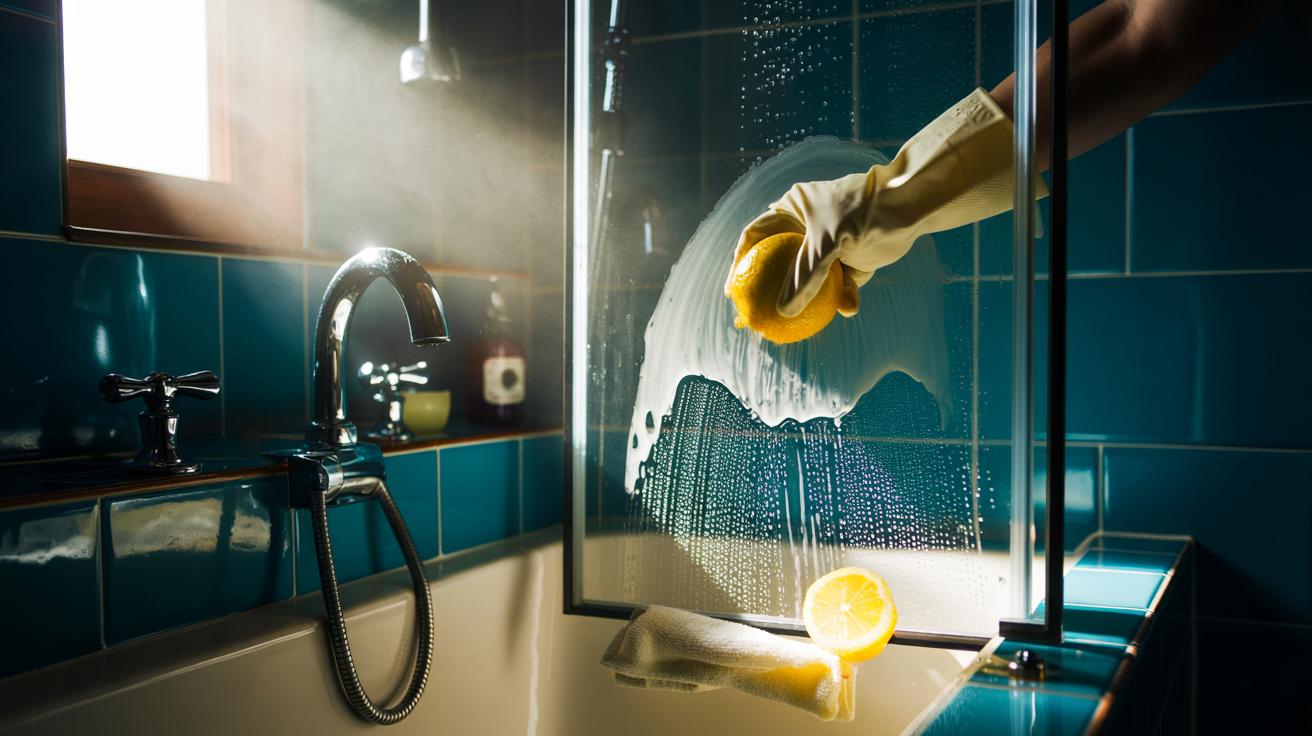
Apply generously to glass, taps, and ceramic. For vertical panels, a light mist avoids runoff; on fixtures, a soaked cotton pad or cloth pressed on the metal keeps contact steady. Let it sit 5–10 minutes. Spend that pause targeting edges and corners with a soft toothbrush. On stubborn bands of scale, rub the cut lemon directly on the stain. The peel acts like a built‑in applicator and releases oils that leave a subtle sheen.
Now wipe. Use a damp microfibre cloth to lift loosened residue in overlapping passes, then rinse with warm water. Squeegee the glass top to bottom. Dry metal with a clean cloth to prevent flash spotting. Optional polish: buff fixtures with a drop of undiluted juice on the cloth for a final pop, then a quick water rinse. Never mix acidic cleaners like lemon juice with bleach or ammonia‑based products. If you need a grout refresh later, do it separately, and rinse between steps.
What to Use It On (and What to Avoid)
The lemon trick is incredibly versatile, but not universal. It’s perfect for tempered glass screens, chrome taps, stainless steel shower heads, and ceramic tiles. Used with care, it freshens silicone seals without degrading them. Where it’s risky is where the surface itself is alkaline stone. Do not use on marble, limestone, travertine, or cement‑based terrazzo — acids etch and dull these irreversibly. If you’re unsure, patch‑test a discreet corner and check for any change in sheen after drying.
| Surface | Safe with Lemon Juice? | Notes |
|---|---|---|
| Shower glass | Yes | Use 5–10 min dwell; squeegee dry. |
| Chrome/Brass (plated) | Yes | Short contact only; rinse and dry. |
| Stainless steel | Yes | Rinse thoroughly to prevent spotting. |
| Ceramic tiles | Yes | Avoid soaking unsealed grout. |
| Natural stone (marble, limestone, travertine) | No | Acid will etch and dull. |
| Anodised aluminium | With caution | Very brief contact; rinse immediately. |
Safety is straightforward. Wear light gloves if you have sensitive skin. Keep the room ventilated. Store a neutral cleaner for stone areas and a separate product for mould on grout. Stick to single‑product sessions: mixing chemicals is unnecessary and risky. For maintenance, a quick lemon rinse weekly prevents build‑up, stretching deep cleans to monthly. If you prefer a boost, a pinch of bicarbonate of soda on the cloth adds gentle scrub without harsh grit — just rinse well to avoid streaks.
Used with a pro’s patience and a journalist’s scepticism, lemon juice earns its place in the cleaning kit. It’s low‑cost, low‑fuss, and kinder on finishes than many heavy‑duty sprays. The real win is consistency: a minute or two each week keeps that just‑polished look without marathon scrubs. Your shower will gleam, taps will sparkle, and the room will smell naturally bright rather than perfumed. Ready to try the citrus method on your own bathroom and see how it compares with your go‑to cleaner — and what little tweaks might perfect it for your water and surfaces?
Did you like it?4.6/5 (29)