In a nutshell
- 🍋 Science: Citric acid + UV triggers gentle photo‑oxidation of melanin for sun‑kissed lift—zero bleach, minimal damage, warm‑leaning tones, and cumulative results.
- 🧪 Ratios & Mix: Start 1:2–1:4 lemon:water by base colour; buffer with conditioner, honey, and a few drops of oil; always do a patch/strand test.
- 🌞 Application & Timing: Target select strands, sit in sun 20–40 minutes (max 45 per session; under 60 weekly), wear SPF, then rinse and deep‑condition.
- 💆 Aftercare & Tone Control: Prioritise moisture masks; use violet shampoo occasionally to counter brass; avoid chlorinated pools on treatment days; stop if scalp feels tight.
- 📊 Quick Reference: Table outlines dilutions, exposure, and expected tones from dark blonde to black and colour‑treated hair; manage expectations or opt for a salon if seeking cool lift.
Sunshine in a bottle. That’s the promise whispered by beauty editors and passed around beaches: a spritz of fresh lemon juice, a little light, and suddenly your hair catches the sun like you’ve spent a fortune in a Mayfair salon. Done right, this at-home highlight trick delivers sun-kissed ribbons with zero bleach and zero heat, only a nudge from nature. The secret is precision rather than luck. Ratios matter. So does timing, conditioning, and protection from UV. Below, you’ll find the science that makes it work, a kitchen-to-garden routine, and a safety-first playbook that keeps hair soft, glossy and bright—never brittle, never brassy.
How the Lemon Juice Highlight Trick Works
Lemon juice contains citric acid, a mild fruit acid that, under sunlight, accelerates the photo-oxidation of melanin—the pigment that gives hair its colour. Think of it as a very gentle, controlled fade that lightens the outer layer of pigment while leaving the inner structure largely intact. Because there’s no bleach or high heat, you avoid the acute cuticle damage of traditional lightening. The effect is subtle, cumulative, and naturally sun-leaning: soft golds, honey, and a touch of copper on darker bases.
UV exposure is the catalyst. When hair misted with diluted lemon juice meets sunlight, free radical reactions break down melanin granules. The pH shift from the acid also helps the cuticle lie flatter after you rinse and condition, boosting shine. Results skew warmer: golden tones for blondes, caramel for brunettes. Very dark or colour-treated hair may see minimal lift or uneven warmth—manage expectations.
Because this method relies on mild oxidation, patience wins. One careful session gives a glow; three to four, spaced out, can build believable dimension. It’s a low-risk, low-cost route to light-catching contrast when you buffer the acid and hydrate generously afterward.
Step-by-Step: From Kitchen to Sun-Kissed Streaks
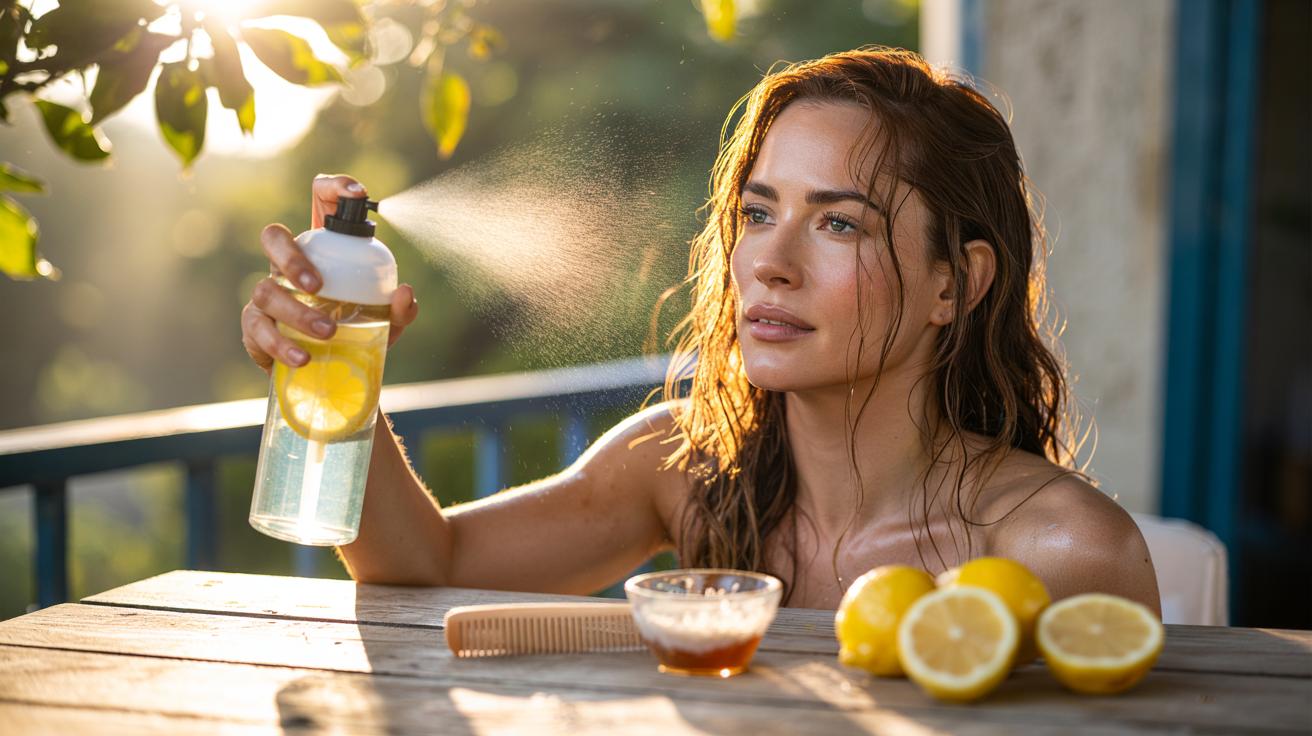
Gather your kit: fresh lemons (or bottled 100% lemon juice), a spray bottle, filtered water, a small squeeze of conditioner, a teaspoon of honey (a natural humectant), a few drops of lightweight oil, wide-tooth comb, hair clips, SPF for skin, and a hat for shade between exposures. Do a patch test 24 hours before if you have a sensitive scalp.
Mix your potion. For dark blonde to light brown hair, start with a 1:2 ratio of lemon juice to water; for medium brown, 1:3. Add 1 tablespoon conditioner, 1 teaspoon honey, and 2–3 drops oil per 200 ml to cushion the acidity. Shake well. Work on clean, towel-dried hair. Clip up sections. Mist only the pieces you want brighter—the canopy, face-framing strands, and the mid-lengths to ends. Comb through lightly to avoid hard lines.
Step into gentle sun for 20–30 minutes. Re-mist stubborn sections once. Keep skin protected. Never bake your scalp and never exceed 45 minutes of direct exposure in a single session. Shade, sip water, then rinse thoroughly with lukewarm water.
Finish with a rich mask for 5–10 minutes. Air-dry or diffuse on cool. Repeat no more than twice a week. In three to four sessions, expect believable, naturally scattered brightness—like a week on the Cornish coast, bottled.
Safety, Aftercare, and Realistic Results
Lemon is gentle compared with bleach, but acidity can still dehydrate. Buffer your mix with conditioner and honey, limit sessions, and feed hair with a weekly protein-light mask plus regular moisturiser. If brass creeps in, a violet-toned shampoo once a fortnight balances warmth without stripping. Always apply SPF to face, neck, and parting during outdoor processing.
If your hair is very dark, heavily dyed, or chemically relaxed, consider a strand test first. You might gain warmth rather than lift. That can be flattering—amber lights on chocolate brown—but it’s different from ash. Those craving cool tones should pair this method with a cool gloss later, or visit a colourist.
Scalp feeling tight? Stop, rinse, and condition. Do not apply undiluted lemon juice to roots. Avoid chlorinated pools on treatment days, as chlorine can interact with residual acidity and shift tone. This is a “slow and soft” technique that preserves feel, sheen, and movement while avoiding structural damage from bleach. Treat it like sun-care for hair: measured exposure, then generous hydration, and your lengths will thank you.
Quick Reference: Dilutions, Timing, and Tones
Use this at-a-glance guide to choose dilution, exposure, and realistic tone shifts. These are starting points—strand test first, then fine-tune. Sun intensity, porosity, and natural undertone all affect results, as does how generously you buffer the mix with conditioner.
| Natural Hair Colour | Lemon:Water | Sun Time (mins) | Expected Tone | Notes |
|---|---|---|---|---|
| Dark Blonde | 1:2 | 20–30 | Honey gold | Builds fast; buffer well |
| Light Brown | 1:2–1:3 | 25–35 | Caramel, soft amber | Multiple sessions look natural |
| Medium Brown | 1:3 | 30–40 | Warm caramel | Strand test to avoid brass |
| Dark Brown/Black | 1:3–1:4 | 30–40 | Subtle warmth | May prefer salon foils |
| Colour-Treated | 1:3+ conditioner | 20–25 | Unpredictable | Test hidden strand first |
Keep total weekly sun-processing under 60 minutes to prioritise hair health. Space sessions by at least three days. If you love the result, lock it in with a clear gloss or lightweight oil on damp hair to amplify shine. For face-framing brightness, paint with a tint brush rather than spraying, feathering from mid-lengths to ends for the softest, most “spent-a-week-in-Devon” finish.
Lemon-lit highlights are a rare beauty bargain: accessible, customisable, and quietly chic. With a buffered mix, measured sunlight, and diligent conditioning, you can coax believable dimension and glassy sheen while sidestepping harsh bleach. The golden rule is simple: be patient, be kind to your hair, and stop at “glow” rather than push for platinum. Ready to try the citrus route to radiance, or will you fold this into a broader summer hair-care plan and see how your strands respond over a few careful sessions?
Did you like it?4.5/5 (25)